
10 Best Ways to Conquer Clutter in Your Garage
You're tired of clutter dominating your garage, wasting valuable space and time. To take back control, start by purging unwanted items, categorizing them into donation, selling, and recycling piles. Then, assign a home for everything, utilizing vertical storage space with shelving, hooks, and labeled bins. Implement a "One In, One Out" Rule to maintain balance. Create a functional work zone with designated workspaces, tool stations, and efficient organization strategies. Label and sign everything for quick identification. By following these strategies, you'll be well on your way to a clutter-free garage - and there's even more to discover to optimize your space.
Key Takeaways
• Sort unwanted items into donation, selling, and recycling categories to declutter and purge your garage.
• Assign a home for everything by categorizing items into groups and allocating specific storage solutions.
• Utilize vertical storage space with overhead storage, shelving, hooks, and labeled bins to maximize storage capacity.
• Designate a tool station area with efficient tool storage, workbench setup, and logical workflow for easy access.
• Schedule regular maintenance days for decluttering, cleaning, and organization tasks to maintain a clutter-free garage.
Purge Unwanted Items First
Purge Unwanted Items First
Start by tackling the easiest part of the garage organization process: getting rid of items you no longer need, use, or love. This step will give you a sense of accomplishment and free up space in your garage.
Begin by gathering boxes or bins and labeling them as 'donation,' 'sell,' and 'recycle.' Ask a friend or family member to be your declutter buddy to keep you motivated and provide a second opinion on what to keep and what to discard.
As you sort through your items, be ruthless – if you haven't used it in the past year, it's likely you won't miss it. Set up a donation pile for items that are still in good condition, and consider hosting a garage sale to make some extra cash.
Don't forget to explore recycling options for items like old batteries, tires, or electronics. By purging your unwanted items, you'll be left with a more manageable space that's ready for the next step in the organization process.
Assign a Home for Everything
Now that you've purged your garage of unwanted items, it's time to assign a home for everything that's left, ensuring each item has a designated place where it can be easily found and stored. This step is pivotal in maintaining your garage's organization and preventing clutter from building up again.
Start by categorizing items into groups, such as tools, sports equipment, and seasonal decorations. Then, allocate specific storage solutions for each group, like bins, shelves, or hooks. Consider the frequency of use and accessibility when determining the location of each item.
For instance, frequently used tools should be stored near the workbench, while seasonal decorations can be stored in labeled bins on higher shelves. By assigning a home for everything, you'll be able to implement effective organization tips and decluttering strategies that optimize your garage's space.
Utilize Vertical Storage Space
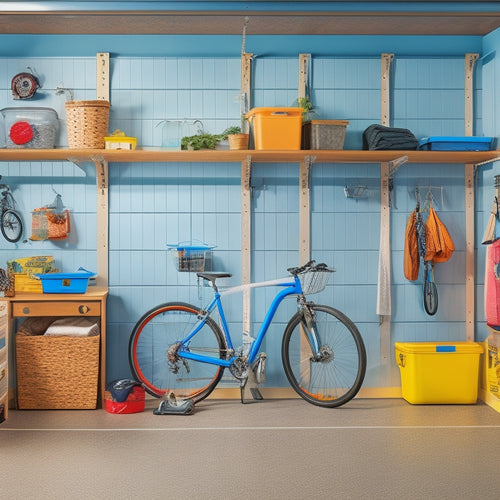
Maximize your garage's storage capacity by installing shelving units, cabinets, or slatwall panels that take advantage of the often-wasted vertical space, keeping your floors and workbenches clear of clutter. This will provide you with ample room to move around and work on projects without tripping over tools or storage bins.
Here are some ways to make the most of your garage's vertical storage space:
-
Install overhead storage solutions like ceiling-mounted bins or racks to store infrequently used items like seasonal decorations or out-of-season sports equipment.
-
Choose vertical shelving options that are adjustable and customizable to fit your specific storage needs.
-
Use wall-mounted hooks to hang bikes, tools, or accessories, keeping them organized and out of the way.
- Invest in stackable storage bins that can be easily labeled and rearranged as your storage needs change.
Implement a "One In, One Out" Rule
Now that you've optimized your garage's storage space, it's time to maintain your clutter-free zone by implementing a 'one in, one out' rule.
This means that for every new item you bring into your garage, you'll need to remove or donate an old one to make space for it.
New Item Policy
To prevent clutter from creeping back into your newly organized garage, adopt a 'one in, one out' policy, where you get rid of an old item every time you bring a new one into the space. This rule guarantees that your garage remains clutter-free and organized.
Here are some ways to make this policy work for you:
-
Rotate items regularly: Store seasonal items in labeled storage bins and rotate them every few months to keep your garage fresh and organized.
-
Track your inventory: Keep an inventory of the items in your garage and update it regularly to make certain you don't accumulate duplicates.
-
Designate a donation box: Set aside a box or bin where you can place items you no longer need or use, and donate them regularly to keep your garage clutter-free.
- Set boundaries: Establish limits on the number of items you allow in your garage, and adhere to them to prevent clutter from building up again.
Clutter-Free Zone Enforced
By enforcing a strict 'one in, one out' rule, you'll maintain a clutter-free garage where every new item is balanced by the removal of an old one, ensuring your space remains organized and functional. This simple yet effective approach is key to sustaining your garage organization efforts over time.
When you bring a new item into your garage, get rid of an old one to make room for it. This will prevent clutter from building up again and keep your space looking its best.
For instance, if you buy a new tool, get rid of an old one that's no longer useful. Similarly, if you purchase a new bike, consider donating or selling your old one. By adopting this 'one in, one out' mindset, you'll maintain a healthy balance between the items you bring into your garage and the ones you remove.
This clutter control strategy will help you stay on top of your garage organization and keep your space clutter-free, functional, and easy to navigate.
Create a Functional Work Zone
Now that you've tackled the clutter, it's time to create a functional work zone in your garage.
You'll want to designate a specific workspace that meets your needs, organize the essential tools you use most, and establish a smooth workflow to maximize efficiency.
Designate a Workspace
Your garage's designated workspace should be a functional zone where you can easily access the tools and supplies you need to tackle projects and repairs efficiently. This area should be designed to maximize productivity, allowing you to focus on the task at hand without distractions.
To create an ideal workspace, consider the following:
-
Create a designated workbench area for projects and storage, keeping frequently used items within easy reach.
-
Set up a separate tool station for easy access and organization, making it simple to find what you need when you need it.
-
Incorporate shelving and cabinets to keep supplies and materials off the floor, reducing clutter and increasing floor space.
- Invest in a pegboard to hang frequently used tools, keeping them organized and visible.
Organize Essential Tools
With your workspace established, you can focus on organizing the tools you need to get the job done efficiently, making it simple to access the right equipment at the right time.
A well-organized tool collection is essential to a functional garage workshop. Start by categorizing your tools into groups, such as hand tools, power tools, and automotive tools. This will help you determine the best storage solutions for each category.
Install pegboards, hooks, and bins to store frequently used tools, keeping them within easy reach. Consider a tool chest or rolling cabinet for larger items and less frequently used tools. Label each storage solution to make sure you can quickly find what you need.
An efficient layout is key to a productive garage workshop. Position your most-used tools in the most accessible locations, and consider a workbench with built-in storage to maximize your space.
Establish a Flow
Create a functional work zone by designating specific areas for different tasks, ensuring a logical flow of activities that saves time and reduces frustration. This flow optimization is essential in decluttering your garage, as it helps you stay focused and avoid wasting time searching for tools or materials.
By assigning a specific area for each task, you'll be able to work more efficiently and effectively.
Here are some key areas to keep in mind:
-
Workbench: Designate a specific area for your workbench, where you can perform tasks like woodworking, repairs, and DIY projects.
-
Tool storage: Assign a specific area for storing your tools, keeping them organized and within reach.
-
Material storage: Designate an area for storing materials like lumber, pipes, and other supplies.
- Cleaning station: Create a cleaning station with a sink, trash can, and cleaning supplies to keep your garage clean and tidy.
Install Shelving and Cabinets
You'll maximize storage space and keep clutter at bay by installing shelving and cabinets tailored to your garage's unique needs and dimensions. When it comes to custom shelving options, you'll need to decide between DIY installation and hiring a professional. Consider your budget, time, and skill level before making a decision. If you're handy, DIY installation can be a cost-effective option. However, if you're short on time or unsure about the installation process, hiring a professional may be the better choice.
| Shelving Type | Advantages | Disadvantages |
|---|---|---|
| Fixed Shelving | Inexpensive, easy to install | Limited flexibility, difficult to adjust |
| Adjustable Shelving | Versatile, easy to reconfigure | More expensive, may require professional installation |
| Wall-Mounted Shelving | Maximizes floor space, easy to clean | May require professional installation, limited weight capacity |
| Corner Shelving | Utilizes dead space, increases storage | Custom design may be required, limited flexibility |
| Modular Shelving | Flexible, easy to reconfigure | More expensive, may not be suitable for heavy items |
Label and Sign Everything
As you label and sign everything in your garage, you'll be amazed at how quickly you can find what you need. You'll want to organize items by category, identify specific storage spaces, and create easy-to-read signs that make sense.
Organize by Category
Divide your garage contents into distinct categories, such as tools, sports equipment, and seasonal decorations, to establish a sense of order and make it easier to find what you need. This is important in organizing your garage, as it allows you to prioritize your sorting essentials and categorize your belongings accordingly.
By doing so, you'll experience the following benefits:
-
Reduced stress: No more scrambling to find what you need in a cluttered garage.
-
Saved time: Spend less time searching and more time enjoying your hobbies or spending time with family.
-
Increased productivity: With everything in its place, you'll be more motivated to tackle projects and tasks.
- Peace of mind: A well-organized garage gives you a sense of accomplishment and control over your space.
Identify Storage Spaces
Now that you've categorized your garage contents, it's time to assign a home for each group by identifying storage spaces that can be optimized for maximum efficiency.
Take a closer look at your garage's layout and pinpoint areas that can be repurposed for storage. Look for hidden compartments, such as the space above your garage door or the corners of your walls, that can be utilized with creative solutions like overhead storage racks or corner shelves.
As you explore your garage, you may stumble upon hidden treasures, like forgotten spaces behind shelves or beneath workbenches, that can be repurposed for storage. Make a mental note of these areas and think about how you can maximize their potential.
Consider installing sliding bins, baskets, or hooks to make the most of these often-overlooked spaces. By identifying and optimizing these storage spaces, you'll be able to store more items in a smaller area, keeping your garage clutter-free and organized.
Easy to Read Signs
You'll be more likely to maintain your garage's organization by labeling and signing everything, making it easy for you and others to quickly identify what's stored where. This simple step can make a huge difference in keeping your garage clutter-free. By labeling and signing storage bins, shelves, and cabinets, you'll avoid the frustration of searching for misplaced items and reduce the likelihood of clutter building up again.
Here are some benefits of using easy-to-read signs in your garage:
-
Color coded organization: Use different colored labels to categorize items, making it easy to find what you need at a glance.
-
User friendly layouts: Design your signs to be easy to read and understand, even for those who don't spend much time in the garage.
-
Customized solutions: Create signs that fit your specific storage needs, such as labeling bins for specific hobbies or activities.
- Creative displays: Use signs to add a personal touch to your garage, making it a more enjoyable space to spend time in.
Designate a Tool Station Area
Create a dedicated tool station area by assigning a specific zone in your garage for tool storage and organization. This will be the heart of your workspace organization, where you can efficiently access and utilize your tools.
When designing your tool station, consider a workbench setup that includes storage solutions such as cabinets, drawers, or pegboards. This will keep your tools organized, protected, and within reach.
As you set up your tool station, think about the tools you use most frequently and prioritize their placement. Group similar tools together, such as hammers and screwdrivers, to create a logical workflow.
Install hooks or bins to store smaller items like nuts, bolts, and fasteners. A well-organized tool station will save you time and reduce frustration when working on projects.
Store Seasonal Items Out of Sight
Designate a hidden storage area for seasonal items like holiday decorations, out-of-season sports equipment, and winter clothing to keep them out of the way and free up valuable garage space. By storing these items out of sight, you'll create a more organized and clutter-free garage that's easier to navigate.
Here are some creative solutions to get you started:
-
Utilize overhead storage: Install overhead shelves or bins to store items like luggage, camping gear, or seasonal decorations.
-
Maximize corner space: Use corner shelves or carousels to store items like out-of-season sports equipment or winter clothing.
-
Invest in stackable containers: Use stackable bins or containers to store items like holiday decorations, seasonal linens, or out-of-season toys.
- Consider a garage attic: If you have a garage with an attic, use it to store items like seasonal decorations, luggage, or camping gear.
Schedule Regular Maintenance Days
Now that you've freed up space by storing seasonal items out of view, it's time to make sure your garage stays organized by scheduling regular maintenance days to keep clutter at bay. This will help you maintain your garage organization and prevent clutter from accumulating again.
To establish a decluttering routine, set aside a specific day and time each month to tackle tasks such as:
| Task | Frequency |
|---|---|
| Quick pick-up | Weekly |
| Deep cleaning | Monthly |
| Organization projects | Quarterly |
| Seasonal changes | Seasonally |
Frequently Asked Questions
How Do I Get My Family on Board With the Garage Organization Process?
You'll get your family on board by involving them in the decision-making process, communicating the benefits, and motivating them with a shared goal, fostering teamwork and a sense of accomplishment.
What if I Have Limited Budget for Storage Solutions and Materials?
"When budget constraints hold you back, think outside the box - or in this case, the garage. You'll find that DIY solutions, repurposing, and creative organization strategies can be just as effective as pricey store-bought solutions, and decluttering tips will help you make the most of what you already have."
Can I Still Park My Car in the Garage After Organizing It?
You can still park your car in the garage after organizing it, depending on your garage layout and space allocation. By prioritizing car maintenance and assigning a designated area for your vehicle, you'll be able to park comfortably.
How Often Should I Clean and Dust the Garage Storage Areas?
You'll maintain your newly organized garage by setting a cleaning schedule, dusting garage shelving monthly, and deep cleaning quarterly to prevent clutter buildup, ensuring your space remains functional and efficient.
Are There Any Safety Considerations I Should Keep in Mind During Organization?
When organizing, you'll want to prioritize safety: take precautions against heavy lifting, handle sharp objects with care, identify hazardous materials, minimize fire hazards, and guarantee proper ventilation to avoid accidents and risks.
Related Posts
-
5 Best Garage Storage Solutions for Small Items
You can turn your garage into a tidy and functional space by implementing smart storage solutions for small items. Ma...
