
10 Clever Garage Storage Hacks for Camping Enthusiasts
You're tired of digging through cluttered garage shelves and bins to find the gear you need for your next adventure. To maximize your space, start by utilizing vertical space with hooks, racks, and ladder racks. Repurpose old furniture into storage units and install sliding storage bins for easy access. Don't forget to hang camping gear from the ceiling and store items in clear containers for easy visibility. By implementing these hacks, you'll be well on your way to creating a functional and efficient garage storage system. Now, discover even more clever ways to optimize your space and make your next camping trip a breeze.
Key Takeaways
• Utilize vertical space with hooks, racks, and ladder racks to maximize storage for camping gear.
• Repurpose old furniture into storage units with added hooks and bins for functional storage.
• Install sliding storage bins or shelves for easy access and organization of camping equipment.
• Strategically use corner space with corner shelving, baskets, or carousels to maximize storage efficiency.
• Design a customized pegboard with hooks, bins, and labels to store camping gear based on size and frequency of use.
Utilize Vertical Space With Hooks
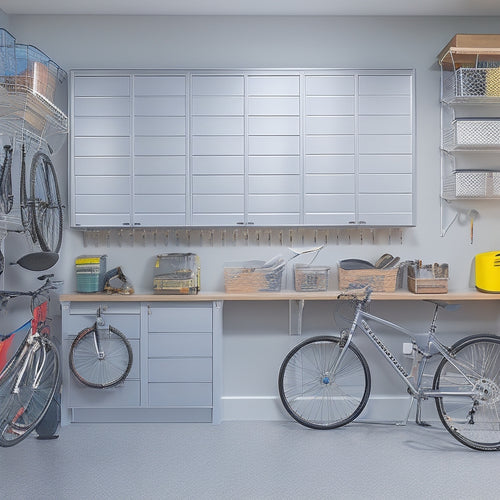
When organizing your garage for camping gear, start by maximizing your vertical space with hooks that can hold everything from bikes to bags. This will free up floor space and keep your gear organized and within reach.
Consider installing ceiling storage racks for infrequently used items like luggage or seasonal gear. Ladder racks are also a great option for storing bulky items like coolers or camping stoves.
For wall organization, bike hooks are a must-have. Install them at a comfortable height to hang your bikes, freeing up floor space and protecting your walls from scratches. You can also use wall-mounted hooks to hang camping gear like helmets, gloves, or bags. Label each hook so you can quickly identify what's stored there.
Repurpose Old Furniture Creatively
You can breathe new life into old furniture by repurposing it as creative storage solutions for your camping gear. For example, converting an old dresser into a shelving unit for storing bins and baskets is a great way to reduce waste and add a touch of vintage decor to your garage.
By thinking outside the box, you can turn an old bookshelf into a storage unit for camping equipment or repurpose an old trunk into a bench with built-in storage.
When repurposing old furniture, it's essential to get creative with the design and layout. Consider the items you need to store and how you can maximize the space. For instance, adding hooks to hang camping gear or installing baskets and bins to store smaller items can be incredibly useful.
With a little imagination, you can create a functional and organized outdoor organization system that is both practical and visually appealing.
Install Sliding Storage Bins
Five sliding storage bins can be installed along the back wall of your garage to maximize vertical storage space and keep your camping gear organized. This setup allows you to store bulky items like tents, sleeping bags, and camping stoves, freeing up floor space for other essentials. You can label each bin to categorize your gear, making it simpler to find what you need when you're preparing for a trip.
Consider installing a sliding cabinet or shelves with built-in bins to optimize your garage shelving. This space-saving solution enables you to store more items in a compact area, keeping your garage clutter-free.
When selecting your storage bins, look for ones with durable construction and smooth gliding action to ensure convenient access to your gear.
Maximize Corner Space Efficiency
By strategically using corner space, you can access additional storage capacity in your garage, perfect for stowing away camping accessories that would otherwise clutter your shelves or floor. Corner shelving is a great space-saving solution to maximize this often-wasted area. You can install shelves, baskets, or carousels that fit snugly into the corner, providing easy access to your gear. Consider using adjustable shelving to accommodate items of varying sizes.
To take it to the next level, think outside the box with creative ideas for hidden storage. You can attach a pegboard to the wall and hang camping tools, like axes or flashlights, or install a slide-out storage unit that holds smaller items like ropes or camping utensils.
Don't forget about the space above your corner shelves – you can add an overhead storage rack for bulky items like sleeping bags or tents. By utilizing these clever corner storage hacks, you'll be able to free up valuable floor and shelf space, keeping your garage organized and clutter-free.
With a little creativity, you can turn your garage into a camping enthusiast's paradise.
Hang Camping Gear From Ceiling
Several feet of ceiling space are waiting to be tapped for storage, and with a few strategically placed hooks, bins, or nets, you can hang camping gear like bikes, kayaks, or luggage out of the way. This ceiling organization hack is perfect for camping enthusiasts who want to free up floor space for other essentials. By utilizing the vertical space, you can store camping equipment like:
| Gear | Storage Solution | Benefits |
|---|---|---|
| Bicycles | Ceiling-mounted hooks | Saves floor space, reduces clutter |
| Kayaks | Overhead storage racks | Keeps gear out of the way, easy access |
| Camping luggage | Hanging bins or nets | Organizes gear, easy to grab and go |
| Fishing rods | Ceiling-mounted rod holders | Protects gear, easy to access |
| Life jackets | Overhead storage bins | Keeps gear dry, out of the way |
Create a Customized Pegboard
You can maximize your garage's storage potential with a personalized pegboard, tailored to hold your camping gear and tools, and keep them within easy reach. This space-saving solution allows you to create a personalized organization system that caters to your specific needs.
Start by evaluating the types of gear and tools you need to store, and then design your pegboard accordingly. Consider the frequency of use, size, and shape of each item to determine the best placement.
Use hooks, bins, and baskets to create a functional and efficient storage system. You can also add labels to each section to make sure everything is easy to find.
A personalized pegboard is a great way to keep your camping gear organized, saving you time and frustration when preparing for your next adventure. By optimizing your garage's storage space, you'll be able to fit more gear and tools, making it easier to get ready for your next camping trip.
With a little planning and creativity, you can create a personalized organization system that streamlines your camping prep and makes the most of your garage's space.
Store Gear in Clear Containers
When you store your camping gear in clear containers, you'll be able to see what's inside without having to rummage through everything. This means you can label and categorize your gear, making it easy to identify what you need and access it quickly when you're getting ready for a trip.
With clear containers, you'll be able to grab what you need and hit the road in no time.
Label and Categorize
Organize your camping gear in clear containers, categorizing similar items together, and label each container so you can quickly identify what's inside. This way, you'll save time searching for that one specific item on your next adventure.
Use color-coded containers to separate categories, like cooking gear, sleeping equipment, or clothing. This organized storage system will make packing and unpacking a breeze.
Consider using compact shelving to maximize your garage space, and store containers that are less frequently used on higher or lower shelves. This space-saving solution will keep your garage clutter-free and make it easier to access your gear.
Label each shelf or container with its contents, so you can grab what you need without having to dig through everything. With this system, you'll be able to find what you need in seconds, and get on the road to your next camping trip in no time.
Easy to Identify
By storing gear in clear containers, you'll be able to see at a glance what's inside, making it easier to find what you need in a hurry. This is especially important for camping enthusiasts who often have to pack and unpack gear quickly. Clear containers allow you to identify the contents without having to rummage through everything, saving you time and frustration.
When organizing essentials like ropes, stakes, and camping tools, clear containers are a game-changer. You can see exactly what's inside, and they're easy to grab when you need them. Plus, they're space-saving solutions that keep your garage floor clear and clutter-free. Labeling the containers is still important, but with clear containers, you'll get a visual reminder of what's inside.
Clear containers also help you keep similar items together, making it easier to find what you need when you need it. For example, you can store all your cooking gear in one clear container, and all your sleeping gear in another. This keeps your gear organized and within reach, making your camping trips more enjoyable and less stressful.
Quick Access Needed
You need gear that's ready to grab at a moment's notice, and clear containers guarantee that your camping essentials are always within quick reach. When you store your gear in clear containers, you'll be able to find what you need in a flash, making quick setup and efficient packing a breeze. No more digging through a pile of random gear or wasting time searching for that one specific item.
Clear containers also bring a sense of organized chaos to your garage storage. You'll be able to see exactly what's inside without having to rummage through everything. This means you can grab what you need and go, without having to worry about leaving anything behind.
Plus, clear containers make it easy to identify what's inside, so you can quickly find what you need, even in low-light conditions.
Designate a Camping Zone
Set aside a dedicated area in your garage for camping gear, and label it clearly to establish a sense of structure and routine. This designated camping zone will help you maintain camping organization and streamline your storage solutions. By separating your camping equipment from other garage items, you'll save time searching for gear and reduce clutter.
Within your camping zone, consider assigning specific areas for different types of gear, such as a section for tents, another for cooking equipment, and a third for sleeping bags. This will make it easier to find what you need quickly and make sure that everything has its designated spot.
You can also install shelving, hooks, or bins to maximize storage space and keep items off the floor.
Implement a Labeling System
To take your camping zone to the next level, establish a labeling system that identifies what's stored in each section, making it easy to grab what you need at a glance. This is where color-coded organization comes in handy. Assign a specific color to each category of gear, such as sleeping bags, cooking equipment, or tools. Use easy-to-read labels that clearly indicate what's inside each bin or container. This way, you can quickly spot what you need and avoid digging through everything.
Implementing a labeling system also enables functional storage and efficient categorization. You can group similar items together, making it easier to find what you need when you need it. For instance, store all your camping cookware in one labeled bin, and your sleeping gear in another. This organized approach saves time and reduces frustration when preparing for your next camping trip.
Optimize Shelving for Bulky Items
As you optimize your garage shelving for bulky camping gear, you'll want to focus on making the most of your available space.
You'll need to strategize how to store heavy equipment, like coolers and generators, without overcrowding the area.
Maximize Vertical Space
Hang heavy-duty shelves or install a slatwall system to capitalize on your garage's vertical space, ensuring bulky camping gear like coolers and tents are safely stowed away. By doing so, you'll create ample storage for your gear, keeping your garage floor clear and organized. This is especially important for camping enthusiasts who've limited garage space.
Here are a few space-saving tips to maximize your vertical storage solutions:
-
Install shelves with adjustable heights to accommodate different-sized items, such as camping stoves, coolers, or luggage.
-
Use stackable bins and containers to store smaller items like camping utensils, first aid kits, or clothing.
-
Mount hooks or a pegboard to hang items like bikes, camping chairs, or lanterns, keeping them off the floor and out of the way.
Designate Zones Easily
You can efficiently designate zones in your garage by assigning specific shelves or areas to bulky items like sleeping bags, camping mattresses, or portable grills. This zone organization system allows you to categorize your camping gear, making it easy to find what you need when you need it.
For instance, you can dedicate a shelf to sleeping gear, another to cooking equipment, and another to outdoor furniture.
To take it a step further, consider color coding your zones using labels or bins with distinct colors. This visual cue will help you quickly identify where each item belongs, saving you time and frustration.
With easy access to your gear, you'll be able to grab what you need and hit the road in no time. By implementing this system, you'll be able to keep your garage organized, your gear protected, and your mind at ease.
Store Heavy Gear
Store Heavy Gear
Optimize your shelving by placing heavy equipment, like coolers and generators, on lower shelves or near the floor to prevent them from falling and to make them easier to access. This strategy guarantees you can retrieve your bulky items without straining your back or risking injury.
Here are three tips to help you store heavy gear efficiently:
-
Install lift assistance: Consider investing in a hydraulic lift or a pulley system to help you hoist heavy items onto higher shelves or into storage bins.
-
Choose secure storage: Use robust shelving units or bins with reinforced floors to prevent your gear from shifting or falling during transport.
-
Label and organize: Clearly label each shelf or bin with its contents and weight capacity, so you can quickly identify what's inside and avoid overloading.
Frequently Asked Questions
How Do I Keep My Garage Floor Clear of Clutter and Obstacles?
To keep your garage floor clear, you'll want to maximize wall organization with creative shelving and utilize overhead storage, freeing up floor space for easy navigation and minimizing clutter.
Can I Store Flammable Camping Gear Near a Water Heater?
Like a ticking time bomb, storing flammable camping gear near a water heater is a recipe for disaster. You shouldn't do it; instead, follow safety precautions and use proper storage techniques to keep flammable hazards away from heat sources.
Are There Any Weight Limits for Hanging Gear From the Ceiling?
You'll want to check your ceiling's weight limits before hanging gear, ensuring you don't exceed the maximum capacity for safety. Consider the weight of each item and distribute it evenly for practical ceiling organization.
How Often Should I Clean and Inspect My Stored Camping Equipment?
You should clean and inspect your stored camping equipment every 3-6 months to prevent damage and make sure it's ready for the next trip, making camping gear maintenance a priority and setting a regular inspection frequency.
Can I Use Garage Storage Solutions for Other Hobbies and Interests?
You can repurpose garage storage solutions for other hobbies, like kitchen organization or sports equipment, by adapting shelving units, bins, and hooks to fit your unique needs, maximizing space and efficiency.
Related Posts
-
Smart Garage Storage Solutions for a Clutter-Free Life
By implementing smart garage storage solutions, you'll open up to 75% more storage space, free yourself from clutter,...
