
10 Essential Tips for a Clutter-Free Garage
To achieve a clutter-free garage, start by purging unwanted items ruthlessly. Then, assign a home for each item, utilizing vertical storage space effectively and installing shelving and cabinets strategically. Designate zones for activities, and label and sign everything for easy identification. Store heavy items below waist level, and keep frequently used items accessible. Schedule regular maintenance to keep clutter at bay. By following these essential tips, you'll be well on your way to a functional and efficient garage space. Take the next step and transform your garage into a haven of organization and productivity.
Key Takeaways
• Assign a home for each item type in the garage, using storage solutions like shelving units and bins to keep clutter at bay.
• Label and sign storage areas clearly and descriptively, utilizing color-coding for categorization and easy identification.
• Store heavy items below waist level, positioning the heaviest items on the lowest shelves or floor to ensure stability and safety.
• Reserve floor space for heavy items, identifying and designating a specific area for substantial belongings and investing in heavy-duty shelving or cabinets.
• Place frequently used items in easy-to-reach locations, near the garage door or high-traffic areas, to reduce frustration and increase productivity.
Purge Unwanted Items First
Take everything out of your garage and sort items into three piles: keep, donate/sell, and discard, to help you decide what's worth keeping and what's not. Be ruthless – if you haven't used it in a year, it's likely you won't miss it.
Consider hosting a garage sale or participating in local donation drives to give your gently used items a new home. You can also make some extra cash by selling items online.
Next, tackle digital decluttering by organizing your computer files and deleting unnecessary documents. Perform a paper purge by recycling or shredding outdated papers and documents. This won't only free up physical space in your garage but also mental energy.
As you sort through your belongings, ask yourself, 'Do I really need this?' or 'Can I replace it if I need it again?' Be honest with yourself, and remember, the goal is to create a clutter-free garage that sparks joy and functionality.
Assign a Home for Each Item
With your garage purged and digital files organized, now it's time to designate a specific spot for each item you're keeping, so everything has a logical place to return to after use. This step is pivotal in maintaining your newly decluttered garage. By assigning a home for each item, you'll create a sense of order and make it easier to find what you need when you need it.
To get started, consider the following organizing strategies:
-
Group similar items together: Store items that serve the same purpose, such as gardening tools or sports equipment, in the same area.
-
Label each zone: Use labels or signs to identify each zone, making it easy to find what you're looking for.
-
Store items by frequency of use: Place frequently used items in easy-to-access locations, while less frequently used items can be stored in harder-to-reach areas.
Utilize Vertical Storage Space
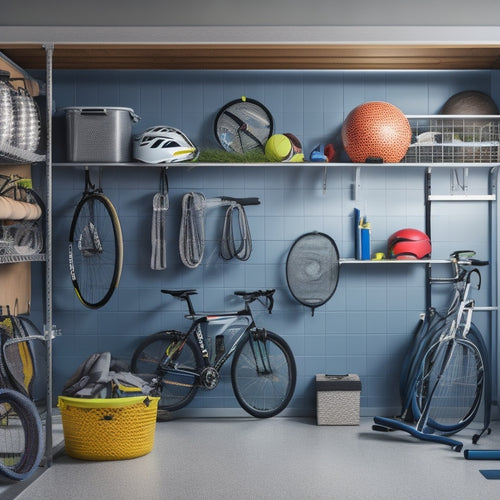
Make the most of your garage's vertical space by installing shelves, hooks, or cabinets that maximize storage capacity while keeping the floor clear. This will help you make the most of your garage's potential and reduce clutter. By utilizing vertical storage, you can free up floor space for more important things, like parking your car or working on DIY projects.
Here are some ideas to get you started:
| Storage Idea | Description |
|---|---|
| Overhead Storage Racks | Perfect for storing infrequently used items like seasonal decor or out-of-season clothing |
| Wall-Mounted Hooks | Great for hanging bikes, tools, or accessories, keeping them organized and within reach |
| Slotted Wall Panels | Ideal for storing small items like bins, baskets, or bags, keeping them visible and accessible |
Install Shelving and Cabinets
Now that you've made the most of your garage's vertical storage space, it's time to think about shelving and cabinets.
You'll be amazed at how much you can store when you install the right shelving units and cabinets that fit your needs.
Storage Options Abound
You'll be amazed at how much more organized your garage can be by setting up shelving and cabinets that maximize vertical storage and keep clutter off the floor. With the right storage options, you can transform your garage into a haven of organization and efficiency.
Here are three essential considerations for setting up shelving and cabinets:
-
Customization: Choose storage solutions that cater to your specific needs. Consider the types of items you need to store, their sizes, and the frequency of use. This will help you create an organization system that truly works for you.
-
Accessibility: Make sure that your shelving and cabinets are easily accessible. Install them at a comfortable height, and consider adding pull-out drawers or bins for easy retrieval.
-
Adjustability: Opt for storage solutions that can adapt to changing needs. Adjustable shelves and modular cabinets can be rearranged as your storage requirements evolve.
Maximize Vertical Space
By setting up shelving and cabinets that extend to the ceiling, you can effectively triple your garage's storage capacity, freeing up valuable floor space for other purposes. This is where vertical organization comes into play, allowing you to make the most of your garage's vertical space.
With creative solutions like wall-mounted shelves and cabinets, you can store items like bikes, tools, and seasonal decorations, keeping them out of the way but still easily accessible.
Consider DIY projects like constructing your own shelving units or repurposing old pallets to create unique storage solutions. This won't only save you money but also give you a sense of accomplishment.
When selecting storage units, opt for ones with adjustable shelves to accommodate items of different sizes. Label each shelf or cabinet to make sure you can quickly find what you need.
Designate Zones for Activities
Divide your garage into distinct areas, each dedicated to a specific activity, such as a workstation, storage area, or parking space, to maintain organization and maximize functionality. By designating areas, you'll create a functional layout that promotes efficiency and makes it easier to find what you need. This approach also helps prevent clutter from building up in the first place.
Here are three key benefits of designing activity areas in your garage:
-
Improved organization: Separate areas keep similar items together, making it easier to locate and access what you need.
-
Enhanced efficiency: With a clear functional layout, you'll waste less time searching for misplaced items or moving through clutter.
-
Increased productivity: By dedicating specific areas to specific tasks, you'll stay focused and accomplish more in less time.
Implement a "One In, One Out" Rule
When you bring a new item into your garage, get rid of an old one to maintain a balanced amount of possessions. This 'one in, one out' rule will help you avoid clutter buildup and guarantee there's space for everything.
New Item, Old Gone
Implementing a 'one in, one out' rule means that for every new item you bring into your garage, you must get rid of an old one to maintain a balanced amount of possessions. This rule helps you avoid clutter buildup and guarantees that your garage remains organized and functional. By adopting this rule, you'll be more mindful of your purchases and think twice before bringing new items into your garage.
Here are three ways to get rid of old items:
-
Donate or recycle items that are still in good condition. This way, you'll be assisting others and reducing waste.
-
Upcycle or repurpose items that can be transformed into something new and useful. Get creative and convert old items into functional pieces for your garage.
-
Discard items that are broken, damaged, or no longer useful. Don't hesitate to let go of items that are taking up valuable space in your garage.
Balance Your Possessions
By enforcing a strict one-in-one-out policy, you'll maintain a delicate balance between the items you bring into your garage and the ones you remove, ensuring that clutter never gets out of hand. This rule is simple: for every new item you bring into your garage, get rid of an old one. This will prevent clutter from building up and keep your garage organized.
When getting rid of an old item, consider donating it or recycling it if it's still in good condition. This way, you'll be decluttering your garage while also doing your part for the environment.
If the item is still useful but no longer needed, consider selling it or repurposing it for another use. By doing so, you'll not only free up space in your garage but also make some extra cash or find a new use for an old item.
Space for Everything
Now that you've mastered the art of balancing your possessions, it's time to designate a specific space for each item in your garage. This is where the 'One In, One Out' rule comes in – for every new item you bring into your garage, remove or donate an old one to maintain a balanced level of possessions.
To effectively implement this rule, consider the following organizing strategies:
-
Assign a home: Designate a specific area or bin for each type of item, such as tools, sports equipment, or seasonal decorations.
-
Use storage solutions: Invest in shelving units, cabinets, or bins that fit your garage's unique space and needs.
-
Label and sign: Clearly label each area or bin, and consider adding signs to help you and others quickly identify where items belong.
Label and Sign Everything
Assign a home to every item in your garage by labeling and signing each storage bin, shelf, and hook, making it easy to find what you need at a glance. This essential organizing strategy will revolutionize your home organization by keeping clutter at bay. By labeling and signing everything, you'll make sure that every item has its designated spot, making it easier to maintain your garage's tidiness.
When it comes to labeling tips, be specific and concise. Use clear and descriptive labels that indicate what's inside the bin or on the shelf. You can also use color-coding to categorize similar items or create a visual hierarchy.
Additionally, consider using storage solutions like stackable bins or hanging organizers to maximize your garage's vertical space.
Store Heavy Items Below
Now that you've labeled and signed everything, it's time to think about where to place your heavy items.
You'll want to store them below waist level to keep them out of the way and free up floor space for easier movement.
Heavy Item Placement
You'll want to position your heaviest items, like tool chests and machinery, on the lowest shelves or directly on the floor to maintain stability and prevent accidents. This is essential for heavy item safety, as it guarantees that the weight of these items is evenly distributed and doesn't put too much pressure on any one area. By doing so, you'll avoid any potential risks of shelves collapsing or items falling, which can lead to injuries or damage.
When it comes to weight distribution strategies, consider the following:
-
Spread the weight: Try to distribute the weight of heavy items across multiple shelves or areas to prevent any one spot from bearing too much weight.
-
Use sturdy shelving: Invest in shelving units that are specifically designed to hold heavy loads, and make sure they're securely anchored to the wall or floor.
-
Keep it balanced: Ensure that the weight of heavy items is evenly distributed on both sides of the shelf or area to prevent tilting or toppling.
Floor Space Priority
By reserving floor space for heavy items, you're creating a solid foundation for your garage organization system and ensuring that your most substantial belongings have a safe and stable home. This floor space priority is essential in maximizing your storage solutions and implementing effective organization strategies.
Start by identifying the heaviest items in your garage, such as tools, equipment, and machinery. Designate a specific area on the floor for these items, ensuring they're easily accessible and not obstructing walkways or workspaces.
Consider investing in heavy-duty shelving or cabinets to store bulky items, keeping them off the floor and out of the way.
Keep Frequently Used Items Accessible
Make sure your most frequently used items, like bikes, tools, or sports equipment, are stored in easy-to-reach locations to save time and effort. This simple tip can make a huge difference in your daily routine. When you need to grab something quickly, you don't want to waste time digging through clutter or maneuvering obstacles. By keeping frequently used items accessible, you'll reduce frustration and increase productivity.
Here are some accessibility solutions to ponder:
-
Install shelving units: Place shelves near the garage door or in high-traffic areas to store items like bikes, tools, or sports equipment.
-
Use hooks and bins: Hang hooks for items like bikes, helmets, or bags, and use bins to store smaller items like balls, gloves, or accessories.
-
Designate a 'launching pad': Create a specific area near the garage door where family members can store their gear, like backpacks, lunchboxes, or water bottles.
Schedule Regular Maintenance
Set aside time each month to maintain your garage's organization, tackling tasks like tidying up clutter, checking inventory, and performing repairs to prevent chaos from creeping back in. This regular maintenance will make sure your garage remains clutter-free and functional.
Create maintenance reminders to stay on track, and consider scheduling seasonal check-ups to address specific needs, such as winterizing your tools or preparing your lawn equipment for spring.
When it comes to tackling tasks, you have two options: professional help or DIY solutions. If you're not comfortable with repairs or organization, consider hiring a professional to assist you. However, if you're looking to save money and develop your skills, DIY solutions can be a great way to go.
Take advantage of online tutorials and resources to help you learn new skills and tackle tasks efficiently. By staying on top of maintenance, you'll be able to enjoy your clutter-free garage for years to come.
Frequently Asked Questions
How Do I Deal With Items That Are Still in Good Condition but No Longer Needed?
Imagine freeing yourself from the weight of unwanted items. You're left with treasures that still shine but no longer serve you. Consider donation options or reselling items to give them a new home, or get creative with repurposing and upcycling techniques to breathe new life into them.
What if I Have a Garage With a Slanted or Uneven Floor?
When dealing with a garage having a slanted or uneven floor, you'll need to repair it before organizing; consider installing ramps or levelling the floor to secure a safe and functional space for your belongings.
Can I Use Storage Bins Made of Fabric or Mesh Instead of Plastic?
You can use fabric bins, which offer pros like softness and flexibility, but consider durability concerns. Alternatively, mesh storage provides excellent breathability and organization benefits, making it a great option for storing items that need airflow.
How Often Should I Clean the Garage Floor to Prevent Oil Stains?
"Sweep slippery secrets away by cleaning your garage floor frequently, ideally every 2-3 months, to prevent oil stains. Try DIY cleaning solutions like baking soda and vinegar, and apply floor protection techniques like sealing to maintain a stain-free surface."
Are There Any Specific Organizing Systems for Seasonal Decorations?
You'll find organizing seasonal decorations a breeze with a labeling system and space-saving solutions like stackable bins and shelves. Create a rotation schedule to guarantee easy access, and don't forget weatherproofing options to protect items from harsh conditions.
Related Posts
-
7 Best Garage Storage Solutions for Athletes
As an athlete, you know the struggle of cluttered garages and lost gear. To maximize your space, start by categorizin...
