
Camping Gear Storage Hacks for Small Garages
You're tired of sacrificing precious garage space to a cluttered mess of camping gear, and it's time to optimize your storage strategy. Start by utilizing vertical space with shelves, hooks, or a pegboard on walls and ceiling. Maximize corner space with shelving or hooks for easy access. Label and categorize your gear by function or activity, and store them in multi-use containers with handles. Hang bulky items like tents and sleeping bags from heavy-duty hooks or pulleys. By implementing these hacks, you'll be well on your way to a clutter-free garage. And there's even more to explore to get your gear organized and out of the way.
Key Takeaways
• Utilize vertical space with shelves, hooks, or pegboards to maximize storage capacity in small garages.
• Implement corner shelving, hooks, or carousels to optimize corner space for camping gear storage.
• Label and categorize gear into bins, baskets, or hooks to ensure easy access and identification.
• Invest in multi-use containers that are durable, stackable, and easy to transport for efficient camping gear storage.
• Consider off-season storage spots like attics, under-bed storage, or closets to free up space in the garage.
Utilize Vertical Storage Space
By installing shelves, hooks, or a pegboard on your garage or shed walls, you can maximize your camping gear storage capacity by utilizing vertical space. This is especially useful for storing bulky items like sleeping bags, tents, and camping stoves.
Consider installing overhead shelves or ceiling hooks to hang items like bikes, kayaks, or paddleboards, freeing up floor space for other gear.
For smaller items, use wall racks or hanging baskets to store camping accessories like flashlights, lanterns, or cooking utensils. You can also install a pegboard and hang bins, baskets, or hooks to store items like ropes, camping chairs, or backpacks.
Maximize Corner Camping Gear
You can reclaim often-wasted corner space in your garage or shed by implementing a few strategic storage solutions specifically designed for camping gear. By doing so, you'll be able to store more gear in a smaller area, keeping your garage or shed organized and clutter-free.
Here are some effective ways to maximize corner camping gear storage:
| Storage Solution | Benefits |
| Corner shelving | Provides gear protection from dust and moisture, and keeps items off the floor |
| Corner hooks | Offers gear visibility and easy access to frequently used items |
| Adjustable corner shelves | Accommodates gear of varying sizes and shapes |
| Hanging corner organizers | Utilizes vertical space, keeping floors and surfaces clear |
| Rotating corner carousels | Allows for easy access to gear stored in the back of the corner |
Label and Categorize Gear
When you label and categorize your camping gear, you'll be able to quickly find what you need and make the most of your storage space.
You'll want to start by classifying your gear into categories, such as cooking, sleeping, and hiking equipment.
Then, you can organize each category by activity and assign specific storage bins to keep everything tidy and easily accessible.
Gear Type Classification
Categorizing your camping gear into distinct groups based on its function or type helps you identify what you have, where it's stored, and what's still needed for your next outdoor adventure. This labeling and categorization process allows you to prioritize gear maintenance, ensuring everything is in good condition for your next trip.
You can categorize your gear into groups like cooking, shelter, sleeping, and clothing. Within these groups, you can further sub-categorize items based on their specific function or type. For instance, under the cooking category, you can have sub-groups for cooking gear, utensils, and food storage.
Organization by Activity
Labeling and categorizing your camping gear by activity streamlines prep time and guarantees that everything you need for a specific task is easily accessible. This method allows you to focus on the task at hand, whether it's setting up camp, cooking, or hiking.
By organizing your gear by activity, you'll avoid the frustration of searching for misplaced items or realizing you've left something behind.
For instance, group all your camping setup gear, such as tent poles, stakes, and ropes, together in one area. Similarly, store your cooking gear, including pots, utensils, and fuel, in a separate section. This activity-based storage system enables you to quickly identify what you need and where it's located.
Additionally, consider implementing gear rotation and seasonal swaps to guarantee your most frequently used items are easily accessible and that out-of-season gear is stored away. By adopting this approach, you'll be able to efficiently pack and unpack your gear, making the most of your camping trips.
Storage Bin Assignment
Assign specific storage bins to each activity-based category, ensuring that all gear related to a particular task, such as setup or cooking, is stored together in its designated bin. This will help you quickly locate what you need when you need it, making your camping trips more efficient.
Label each bin clearly, so you can easily identify what's inside. Consider using different colored bins or labels to differentiate between categories.
When selecting storage bin sizes, think about the gear you'll be storing. Larger bins are perfect for bulky items like tents and sleeping bags, while smaller bins are better suited for smaller items like cooking utensils and flashlights. This will help prevent overcrowding and make it easier to access what you need.
As you store your gear, consider the gear rotation principle. Store the items you use most frequently in easy-to-reach locations, and less frequently used items towards the back or on higher shelves.
Invest in Multi-Use Containers
You'll find that investing in multi-use containers is a game-changer for camping gear storage, as they can serve as shelves, drawers, and even tables, depending on your creative arrangement. These versatile containers will help you maximize your garage's space and keep your gear organized.
Here are some benefits of using multi-use containers for camping gear storage:
-
Container organization: Label each container to categorize your gear, making it easy to find what you need when you need it.
-
Space saving: Stackable containers allow you to store more gear in a smaller area, freeing up space in your garage.
-
Gear protection: Durable containers shield your gear from moisture, dust, and pests, keeping it in top condition.
- Easy transport: Many multi-use containers have handles, making it simple to transport your gear to and from the campsite.
Hang Camping Equipment Efficiently
Optimizing your garage's vertical space by hanging camping equipment efficiently is a smart way to reclaim floor space and keep your gear within easy reach. By doing so, you'll create a more organized and functional storage area. Here are some tips to help you hang your camping equipment like a pro:
| Gear Type | Hanging Solution |
|---|---|
| Tents and tarps | Use heavy-duty hooks or a pulley system to hang them from the ceiling |
| Sleeping bags and pads | Suspend them from a sturdy rod or a storage rack |
| Backpacks and camping chairs | Hang them on a pegboard or a slatwall with hooks |
| Gear with straps or handles | Utilize S-hooks or carabiners to hang them from a rack or a beam |
When hanging your gear, consider the weight capacity of your hooks or racks, and make sure they're securely installed. Additionally, think about gear drying – hang items that need to air dry, like wet tents or sleeping bags, in a well-ventilated area. Proper rack installation is also essential to prevent damage to your gear or the garage structure. By following these tips, you'll be able to hang your camping equipment efficiently, freeing up valuable floor space in your small garage.
Store Gear Out of Season
When the camping season comes to a close, you'll want to prioritize which gear to store first to guarantee everything stays in top condition.
You'll also need to identify off-season storage spots that are dry, secure, and easily accessible.
Gear to Store First
Gear to Store First
Start by storing out-of-season gear, like winter camping equipment or summer water sports gear, to free up space and reduce clutter in your storage area. This will give you a head start on organizing your camping gear and make it easier to maintain and select the right gear for your next adventure.
When storing out-of-season gear, keep the following in mind:
-
Clean and dry gear before storing to prevent moisture buildup and damage.
-
Perform gear maintenance tasks, such as inspecting and repairing damaged equipment, to guarantee it's in good condition when you need it again.
-
Choose the right storage containers that are durable, waterproof, and pest-proof to protect your gear from damage.
- Label and categorize stored gear so you can easily find what you need when the season rolls around again.
Off-Season Storage Spots
Where will you stash your out-of-season camping gear to keep it safe, dry, and organized until its next adventure? You'll want to choose a spot that's protected from the elements and pests. Consider attic storage for items like sleeping bags, tents, and backpacks. Just be sure to use sturdy bins or bags to keep them clean and dry.
If you have limited attic space, look under your bed for storage containers that can hold smaller items like flashlights, cookware, or clothing.
Closet organization can also be a great solution. Invest in shelving or hanging organizers to maximize your closet's storage potential. You can also repurpose old luggage or storage bins to hold gear.
If you're lucky enough to have a basement, take advantage of its storage possibilities. Basement solutions like shelving units or storage cabinets can keep your gear organized and out of the way.
Whatever spot you choose, make sure it's easily accessible so you can grab your gear and go when the next camping trip rolls around. By storing your gear thoughtfully, you'll guarantee it remains in great condition and is ready for its next adventure.
Optimize Garage Shelving Units
Maximize your garage's vertical space by installing shelving units that go up to the ceiling, allowing you to store camping gear in labeled bins and keep the floor clear. This will give you more room to maneuver and make it easier to find what you need.
To take your garage shelving to the next level, consider the following:
-
Utilize garage wall hooks to hang items like bikes, helmets, or even camping gear bags, keeping them off the floor and out of the way.
-
Install ceiling racks to store bulky items like kayaks or canoes, freeing up valuable floor space.
-
Use rolling storage carts to store smaller camping gear, like cooking equipment or tools, and easily move them in and out of the garage.
- Add under shelf baskets to store items like camping clothes, sleeping bags, or other accessories, keeping them organized and out of sight.
Related Posts
-
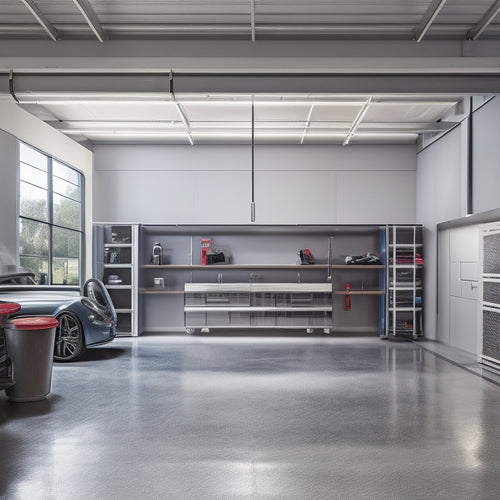
Top Garage Shelving Units for a Dream Garage
You're just a few smart shelving decisions away from transforming your cluttered garage into a well-organized haven w...
