
Declutter and Simplify: A Senior's Garage Makeover
You're ready to transform your cluttered garage into a peaceful oasis. Start by appraising the current state, noting what's cluttered and dusty, and identifying items you can part with. Be decisive and clear out items that no longer serve a purpose. Next, sort items into categories and evaluate their sentimental value. Create a strategic storage plan, utilizing vertical space and grouping similar items together. Implement a labeling system for tools and schedule regular clean-ups to maintain your new space. With a clear plan, you'll be on your way to a functional and clutter-free garage that reflects your new stage of life - let's get started on the path to simplicity.
Key Takeaways
• Evaluate items based on purpose, joy, and sentimental value to decide what to keep, donate, sell, or discard in the garage.
• Implement a strategic storage plan tailored to your needs, grouping items into categories and utilizing vertical space with wall-mounted racks and hooks.
• Categorize tools into groups, assign each a designated home, and use labeling systems to quickly locate them and maintain easy access.
• Schedule regular clean-ups and develop a habit of returning tools to their designated spots to maintain a clutter-free and functional garage.
• Be mindful of new items entering the garage and incorporate routine maintenance to sustain a simplified and organized space.
Assessing the Current State
Take stock of your garage's current condition by walking in and making a mental note of what you see, from the cluttered shelves to the dusty floor. This is the first step in the decluttering process, and honesty is crucial when assessing what you're looking at. You'll likely notice areas where clutter has accumulated over time, sentimental items that hold memories but serve no practical purpose, and outdated equipment that's no longer useful.
Clearing out the clutter and outdated equipment will provide you with a fresh start and enable you to determine what you truly need to keep. Be decisive – if you haven't used it in a year, it's probably safe to part with it.
As you observe the scene, consider what you want to achieve with your garage makeover. Do you aim to free up space for a hobby or activity? Do you need to establish a more organized storage system? Clarifying your goals will help you maintain focus throughout the decluttering process.
Sorting and Purging Strategies
You'll need to develop a sorting system to categorize items into keep, donate, sell, and discard piles, ensuring that each item is evaluated against your garage makeover goals. This system will help you make intentional decisions about what stays and what goes.
When deciding what to keep, ask yourself if the item serves a purpose, brings joy, or holds sentimental value. Be honest with yourself – if it's broken, outdated, or no longer useful, consider letting it go.
As you sort, you'll likely encounter items with emotional attachments. It's natural to feel sentimental about certain possessions, but remember that keeping them won't bring back memories; it's the memories themselves that are precious. Consider taking photos of items you want to remember but don't need to keep, or create a digital archive of your favorite mementos.
When deciding between donation and disposal, ask yourself if the item can be repurposed or benefit someone else. If not, it's likely time to let it go.
Maximizing Storage and Space
With your garage purged of unnecessary items, it's time to optimize the remaining space by implementing a strategic storage plan that accommodates your needs and priorities. This is where you'll create a functional and efficient space that makes the most of your garage's dimensions.
Start by identifying the items you need to store and group them into categories, such as seasonal decorations, tools, and sporting equipment.
Next, consider the storage solutions that will work best for each category. For example, install shelves or cabinets for infrequently used items, and use bins or baskets for smaller items like balls or gardening supplies.
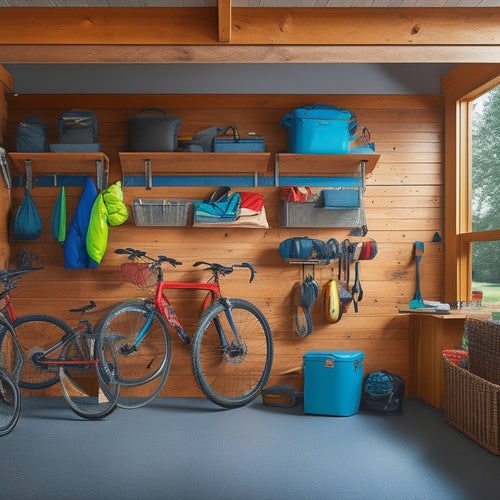
Make the most of your garage's vertical space by using wall-mounted storage racks or hooks for bikes, tools, or other equipment. By optimizing your storage, you'll create a sense of calm and control, making it easier to find what you need when you need it.
Effective space optimization will also help reduce clutter from accumulating in the future, ensuring your garage remains a peaceful and functional space.
Organizing Tools and Equipment
Sorting through your tools and equipment is essential to creating a well-organized garage, as it allows you to efficiently access what you need when you need it. Start by categorizing your tools into groups, such as hand tools, power tools, and lawn care equipment. Once you've grouped your tools, assign a home for each category using a labeling system. This will help you quickly locate what you need.
Next, install a tool rack or wall-mounted storage to keep frequently used tools within easy reach. Consider adding overhead bins to store less frequently used items, such as seasonal decorations or out-of-season sports equipment. This will help keep your garage floor clear and create more space for other activities.
Remember to store similar items together, and keep items you use most often in easy-to-access locations. By organizing your tools and equipment, you'll be able to find what you need quickly and easily, making it easier to tackle projects and maintain your garage.
Maintaining the New Order
Now that your tools and equipment are organized, it's time to establish habits to maintain this new order and ensure your garage remains clutter-free and functional. To make sure your hard work doesn't go to waste, incorporating routine maintenance into your daily habits is crucial.
Here are some decluttering tips to help you maintain your newly organized garage:
-
Schedule regular clean-ups: Set aside 30 minutes each week to tidy up your garage and remove any clutter that's accumulated.
-
Put things back in their place: Make it a habit to return tools and equipment to their designated storage spaces after use.
-
Monitor your storage: Regularly assess your storage solutions to verify they're still functional and make adjustments as needed.
- Don't let clutter creep back in: Be mindful of new items you bring into your garage and ensure they have a designated place to avoid clutter building up again.
Related Posts
-
Maximizing Garage Space for Outdoor Gear Storage
You're struggling to find space for your outdoor gear in your cluttered garage. To maximize storage, start by evaluat...
