
Garage Storage Mastery: Expert-Approved Organization Tips
You're about to transform your cluttered garage into a haven of efficiency and productivity by mastering the art of garage storage and organization. First, assess your garage's dimensions and obstacles to identify storage needs. Purge clutter by categorizing items, designating a donation box, and implementing a labeling system. Then, design a functional layout plan, assigning zones and optimizing storage space. Select the right storage solutions, maximizing vertical space with shelving units and overhead racks. Utilize hidden storage areas and maintain organization over time with consistent tidying habits. Now, take the next step to discover how to fine-tune your garage storage mastery.
Key Takeaways
• Conduct a thorough space assessment to identify dimensions and obstacles, and categorize items based on access frequency.
• Purge clutter and junk by sorting, categorizing, and designating items for donation or disposal, and implement a labeling system for organization.
• Design a functional layout plan by assigning zones, optimizing storage space, and incorporating innovative storage ideas like overhead racks and wall-mounted bins.
• Select the right storage solutions based on needs, considering types of items to be stored, and opt for space-saving solutions like shelving units, cabinets, or hooks.
• Maintain organization over time by setting aside time for tidying up, scheduling deeper clean and organization sessions, and establishing consistent maintenance habits.
Assessing Your Garage Storage Needs
Assessing Your Garage Storage Needs
To effectively create a garage storage system that meets your needs, you must first take stock of what you need to store, how often you'll access it, and the space you have available. This pivotal step is often overlooked, leading to inadequate storage solutions that fail to address your specific garage organization needs.
Conduct a thorough space assessment to identify the dimensions of your garage, including any obstacles like pipes, ductwork, or windows. Next, categorize the items you need to store into groups, such as seasonal decorations, tools, and sports equipment. Consider how frequently you'll need to access each item and prioritize accordingly.
Purging Clutter and Junk Effectively
To effectively purge clutter and junk from your garage, you'll need to start by sorting and categorizing items into groups. This will help you identify unwanted objects that are no longer serving a purpose, making it easier to decide what to keep and what to discard.
As you sort, designate a donation box to collect items that can be given a new home, and be ruthless about letting go of anything that's broken, outdated, or unnecessary.
Sort and Categorize Items
By separating items into groups, you'll be able to identify what's worth keeping, what can be donated or sold, and what's destined for the trash. This vital step in garage storage mastery helps you make intentional decisions about what stays and what goes.
Create groups that make sense for your specific needs, such as:
-
Tools and Equipment: drills, wrenches, and other devices
-
Seasonal Decorations: holiday lights, inflatables, and outdoor decor
-
Sports and Outdoor Gear: bicycles, camping equipment, and sports balls
- Storage and Supplies: bins, baskets, and organizational materials
As you categorize, consider implementing a labeling system to make sure everything has a designated home. This will help maintain your newly organized space and make it easier to find what you need in the future.
Container organization is also key, as it will keep similar items grouped together and prevent clutter from building up again. By sorting and categorizing your items, you'll be well on your way to achieving garage storage mastery.
Identify Unwanted Objects
What's holding you back from parting with items that no longer serve a purpose or bring you joy, and how can you overcome these emotional or practical barriers to declutter effectively?
The decluttering process can be challenging, but it's crucial to identify unwanted objects to make room for storage solutions that matter. Start by asking yourself: 'When did I last use this item?' or 'Does it hold sentimental value?' Be honest with yourself, and consider the following criteria to determine what stays and what goes:
| Item | Criteria | Action |
|---|---|---|
| Old tools | Damaged or outdated | Dispose of or repurpose |
| Seasonal decorations | Outgrown or unused | Give away or store out of sight |
| Unused sporting goods | Good condition, yet unused | Trade or donate |
Designate a Donation Box
Set up a designated donation box in a convenient location, like your garage or mudroom, where you can collect items that meet your criteria for purging, making it easy to gather and transport them when the time comes. This strategic move will streamline your decluttering process, ensuring an efficient donation experience. By having a dedicated box, you'll be more likely to follow through with your purging decisions, rather than letting items linger in limbo.
Here's what your donation box might look like:
- Filled with gently used clothing, shoes, and accessories
- Stacked with books, CDs, and DVDs in good condition
- Containing household items, such as kitchenware, linens, and small appliances
- Holding toys, games, and sporting goods that are still in great shape
Designating a donation box is an essential part of your decluttering strategy, as it provides a clear endpoint for items you no longer need or want. By doing so, you'll maintain momentum in your decluttering process, and make it easier to let go of items that are no longer serving you.
Designing a Functional Layout Plan
As you start designing a functional layout plan for your garage, you'll need to ponder three vital points to maximize storage and efficiency.
You'll want to assign zones for specific activities, optimize your storage space to fit your needs, and guarantee a smooth workflow traffic flow that saves you time and energy.
Zone Assignment Strategy
How will you maximize your garage's potential by dividing it into zones that cater to your specific storage needs? By assigning specific zones, you'll create a functional layout that streamlines your organization and storage. This zone assignment strategy is key to a well-organized garage.
Here's a breakdown of what your zones might look like:
-
Tool Zone: Designate a specific area for your power tools, hand tools, and accessories, and label it accordingly.
-
Seasonal Zone: Reserve a section for seasonal items like holiday decorations, out-of-season sports equipment, or winter clothing.
-
Project Zone: Allocate space for ongoing projects, like a DIY workbench or a crafting station.
- Storage Bin Zone: Designate a area for storage bins and containers, making it easy to access and store items like camping gear, luggage, or infrequently used items.
Storage Space Optimization
With a clear zone assignment strategy in place, design your functional layout plan by mapping out the dimensions of each zone and identifying the most efficient storage configurations to maximize your garage's storage space.
You'll want to contemplate the items you'll be storing in each zone and the frequency of use. This will help you determine the best space-saving solutions, such as shelving units, cabinets, or hooks, to keep items organized and easily accessible.
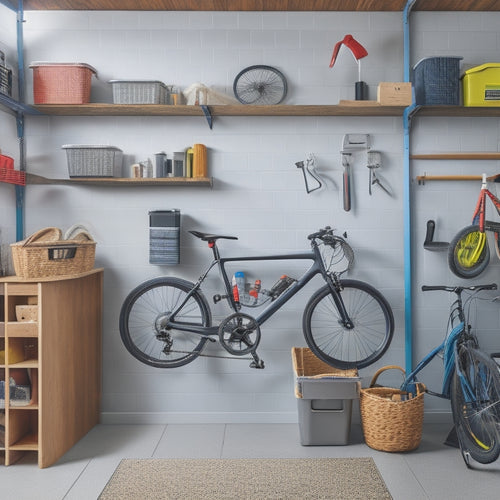
Think creatively about your storage needs, incorporating innovative storage ideas like overhead storage racks, wall-mounted bins, and magnetic strips to keep items like bikes, tools, and accessories off the floor. By doing so, you'll create a clutter-free living space that's both functional and visually appealing.
Apply organization hacks like categorizing similar items together, labeling storage containers, and designating a 'launching pad' for frequently used items to maintain a sense of order and control.
Workflow Traffic Flow
You'll need to design a functional layout plan that directs workflow traffic flow, guaranteeing a logical pathway through your garage that accommodates your daily routine and minimizes congestion. A well-planned layout design is vital for workflow optimization, as it enables you to move efficiently through the space without obstacles. This, in turn, enhances storage efficiency and reduces frustration.
To achieve a smooth traffic flow, consider the following key elements:
-
Entrance and exit points: Designate clear entry and exit points to prevent bottlenecks and ensure easy access to frequently used items.
-
Work zones: Create separate areas for different activities, such as a DIY station, a sports equipment zone, or a pet area, to keep clutter contained and maintain organization.
-
Pathway clearance: Guarantee a clear pathway through the garage, keeping frequently used items within easy reach and avoiding narrow walkways.
- Task-oriented stations: Position task-oriented stations, like a workbench or a potting station, near relevant storage areas to streamline your workflow.
Selecting the Right Storage Solutions
When it comes to maximizing your garage's storage capacity, identifying the appropriate storage solutions for your specific needs is crucial, as this decision will significantly impact the overall functionality and organization of your space. You'll want to contemplate storage container options that align with your unique requirements, such as bins, baskets, and cabinets.
Shelving solutions are also vital, as they provide a sturdy base for storing items like tools, equipment, and seasonal decorations. As you select your organizational systems, ponder the types of items you need to store and how frequently you'll need to access them. Look for space-saving ideas like stackable containers, wall-mounted shelves, and hanging organizers.
These will assist you in optimizing your garage's vertical and horizontal space. Additionally, take into account the durability and material of your storage solutions, as they'll need to withstand the garage's distinct environment. By investing time in selecting the appropriate storage solutions, you'll be able to establish a garage that's both functional and organized, simplifying your life and enhancing efficiency.
Maximizing Vertical Storage Space
As you seek to master your garage storage, don't overlook the importance of maximizing your vertical space. Sixty percent of your garage's storage capacity lies in its vertical space, which makes it essential to utilize wall-mounted shelves, hooks, and bins to capitalize on this often-underutilized area.
By doing so, you'll be able to store more items while keeping your floor clear and creating a more organized space.
Here are some ways to make the most of your vertical storage space:
-
Install shelving options that are sturdy and adjustable, allowing you to customize your storage to fit your needs.
-
Utilize overhead racks for infrequently used items, such as seasonal decorations or out-of-season clothing.
-
Hang wall hooks for bikes, tools, or accessories, keeping them off the floor and within easy reach.
- Invest in pegboards with customizable bins and hooks to store small items like nuts and bolts, or cleaning supplies.
Utilizing Hidden Storage Areas
Having maximized your garage's vertical space, turn your attention to uncovering hidden storage areas that can further enhance your garage's organizational capabilities.
You'll be surprised at how much additional storage you can squeeze out of your garage by thinking creatively. Look for opportunities to create hidden compartments, such as installing sliding drawers under your workbench or building a secret storage cabinet behind a wall.
Innovative designs, like hollowed-out shelves or fake electrical outlets with storage, can also help keep clutter at bay. Consider repurposing existing features, like turning an old window into a storage nook or using the space above your garage door for overhead storage.
By incorporating these creative solutions, you'll be able to stash items like seasonal decorations, out-of-season clothing, or even valuable tools, keeping them out of sight but still easily accessible.
With a little imagination, you can uncover ample hidden storage areas in your garage, keeping your space organized and clutter-free.
Maintaining Organization Over Time
Maintaining Organization Over Time
Regularly scheduling maintenance sessions will help you stay on top of your garage's organization, ensuring that your carefully crafted systems and storage solutions continue to function efficiently over time. By doing so, you'll avoid the chaos that can creep back in, and your garage will remain a haven of productivity and efficiency.
Here are some tips to help you maintain organization over time:
-
Set aside 30 minutes each week to tidy up and put away items that have fallen out of place
-
Schedule a deeper clean and organization session every 3-6 months to tackle any clutter that has built up
-
Make time management a priority by assigning specific tasks to specific days or weeks, ensuring that your garage organization stays on track
- Establish consistent maintenance habits, such as checking and restocking supplies, to prevent clutter from accumulating in the future
Related Posts
-
Boost Productivity With Efficient Garage Storage Solutions
By optimizing your garage storage, you'll free up time and energy to focus on what matters. Start by evaluating your ...
