
Optimize Your Garage: Proven System Design Essentials
You're ready to transform your cluttered garage into a productive haven. Start by evaluating your space, taking precise measurements, and noting existing features. Purge items you haven't used in a year, categorizing what's left into keep, donate/sell, and discard piles. Assign a home for each item, designating zones for tools, sports equipment, and storage. Optimize vertical space with overhead racks, and utilize corner and wall areas for efficient storage. Implement a workstation system with task lighting and flexible shelving options. By following these essential system design principles, you'll be well on your way to a clutter-free, organized workspace that boosts your productivity and calm - and there's more to explore to take your garage to the next level.
Key Takeaways
• Assess garage space by determining dimensions, layout, and existing features to optimize storage and workflow.
• Purge and categorize items into keep, donate/sell, and discard piles to declutter and organize the garage.
• Assign a home for each item by designating specific spots and creating designated zones for tools, sports equipment, and storage.
• Maximize storage space by utilizing ceiling height, corner and wall areas, and implementing flexible shelving options.
• Maintain a clutter-free zone by implementing storage solutions, categorizing items, and following the 'one in, one out' rule for new items.
Assessing Your Garage Space
Determining your garage's dimensions, layout, and existing features is crucial to creating a functional and efficient space that meets your specific needs. You'll want to take precise measurements of the room, including the width, length, and height of the space. Note the location of doors, windows, and any obstructions, such as pipes or ductwork.
Evaluating the layout will help you identify areas that can be optimized for storage solutions. Consider the flow of traffic in the garage and how you can create zones for different activities, like parking, storage, and workspaces.
As you analyze the space, think about your needs and priorities. What types of items do you need to store, and how often will you access them? Are there any specific features you want to incorporate, such as a workbench or bike storage?
Purge and Categorize Items
With your garage's dimensions and layout freshly in mind, it's time to tackle the often-daunting task of purging and categorizing the items that have accumulated in your garage over time.
Start by sorting items into three piles: keep, donate or sell, and discard. Be ruthless – if you haven't used it in the past year, it's probably safe to get rid of it. Donate unused items that are still in good condition to reduce clutter and give back to your community.
Next, organize your tools into categories, such as hand tools, power tools, and automotive tools. This will make it easier to find what you need when you need it. Sort through seasonal gear, like winter sports equipment or summer lawn care tools, and arrange them in a way that makes sense for your lifestyle.
For example, you might store winter gear in labeled bins and hang summer gear on hooks or in baskets. Finally, arrange sports equipment, such as bikes or balls, in a way that keeps them accessible and prevents damage.
Assign a Home for Each Item
Now that you've purged and categorized your garage items, it's time to assign a home for each one.
You'll need to designate a specific spot for each item, grouping similar items together to maximize efficiency.
Designate a Spot
You'll want to assign a specific place for each item in your garage, ensuring that everything has a designated spot to prevent clutter and disorganization.
This is where designated zones come into play. Create zones for specific categories, such as tools, sports equipment, and storage.
Within these zones, implement storage solutions that cater to the items you're storing. For instance, install hooks for bikes, bins for balls, and shelving for tools.
Categorize and Group
Take everything out of your garage and categorize items into groups based on their purpose, frequency of use, or type, so you can assign a home for each item. This pivotal step helps you create a functional and efficient storage system.
Grouping items by category, such as gardening tools, sports equipment, or automotive supplies, makes it easier to find what you need and prevents clutter from building up in the future.
Organizing by category also enables you to identify which items are used frequently and which ones can be stored out of the way. This information is vital for optimizing space usage and designing an efficient storage system.
Store Items Vertically
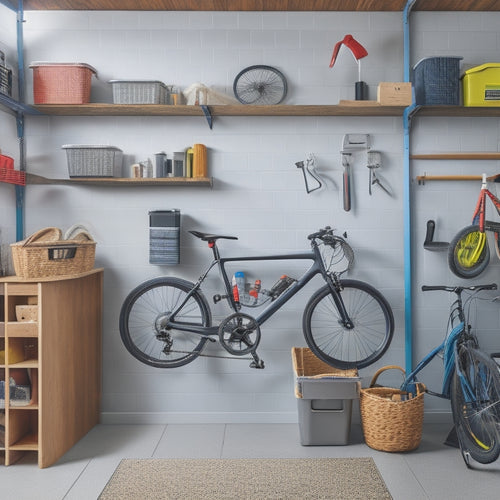
To maximize your garage's storage capacity, assign a home for each item by storing them vertically, utilizing wall-mounted shelves, hooks, and bins that keep belongings off the floor and out of the way. This approach not only frees up floor space but also helps you make the most of your garage's vertical space.
Here are some creative solutions to get you started:
-
Install a pegboard:
Hang bins, baskets, and hooks to store items like bikes, tools, and accessories. -
Use stackable containers:
Label and store items like seasonal decorations, out-of-season clothing, and equipment in labeled bins. -
Mount a shelving unit:
Store items like luggage, camping gear, and storage bins on adjustable shelves.
-
Hang a bike lift:
Suspend your bike from the ceiling, freeing up floor space and keeping your bike organized.
Optimize Vertical Storage Space
When designing your garage, you'll want to make the most of the space you have, and that means looking up. Since you can't expand your garage's footprint, you'll need to optimize your vertical storage space to fit more items.
Maximize Ceiling Height
By incorporating vertical storage solutions, you can access the full potential of your garage's ceiling height, creating a more spacious and organized environment. This allows you to make the most of your garage's vertical space, freeing up floor space for more important things.
To maximize your ceiling height, consider the following:
-
Install overhead storage racks: Perfect for storing infrequently used items like seasonal decorations or out-of-season clothing.
-
Use ceiling-mounted bike lifts: Keep your bikes organized and out of the way, while also keeping your floor clear.
-
Add overhead lighting options: Brighten up your garage with LED strips or pendant lights, making it easier to find what you need.
- Hang bins and baskets: Store small items like tools, accessories, or sporting equipment in labeled bins and baskets.
Utilize Wall Space
You can further enhance your garage's storage capacity by leveraging the often underutilized wall space, which offers a prime opportunity to optimize vertical storage and keep your floors and counters clear. By doing so, you'll create a more organized, clutter-free environment that's both functional and visually appealing.
To get started, consider DIY shelving ideas that cater to your specific storage needs. Install shelves at varying heights to accommodate items of different sizes, from bins and baskets to tools and equipment.
Next, incorporate clever storage solutions like cabinets, pegboards, or slatwall panels to maximize your wall's storage potential.
Don't forget to utilize functional wall hooks for hanging bikes, tools, or accessories, keeping them easily accessible while freeing up floor space.
Additionally, implement creative organization tips, such as labeling your storage containers or grouping similar items together, to ensure everything has its designated place.
Utilize Corner and Wall Areas
Maximize your garage's storage potential by incorporating corner and wall-mounted shelves, cabinets, and hooks to keep items off the floor and out of the way. This won't only free up floor space but also keep your garage organized and clutter-free.
By utilizing corner and wall areas, you can create a more efficient storage system that makes the most of your garage's space.
Here are some ideas to get you started:
-
Install corner shelving to store bins, baskets, or containers filled with seasonal decorations, out-of-season clothing, or other infrequently used items.
-
Hang wall hooks for bikes, tools, or accessories, keeping them organized and easily accessible.
-
Mount a pegboard on a wall or in a corner to hang frequently used items like hammers, screwdrivers, or wrenches.
- Add a wall-mounted cabinet to store chemicals, paints, or other hazardous materials out of reach of children and pets.
Implement a Workstation System
Set up a workstation system in your garage to create a dedicated area for projects and repairs, allowing you to stay focused and efficient. A well-designed workstation will help you maximize your productivity and minimize frustration.
Start by selecting a location with ample space to accommodate your tools, equipment, and workpieces. Consider the ergonomic workspace and position your workstation to reduce strain on your body. Install task-specific lighting to illuminate your work area, ensuring you can see even the smallest details.
Next, prioritize tool organization and storage solutions. Install tool holders, bins, and trays to keep your frequently used tools within easy reach. Label each storage compartment to maintain a sense of organization and reduce search time. Additionally, incorporate a pegboard or slatwall to hang infrequently used tools, keeping them off the floor and out of the way.
With a well-organized workstation, you'll be able to tackle projects with confidence, knowing exactly where to find the tools you need. By implementing a workstation system, you'll transform your garage into a hub of productivity and efficiency.
Incorporate Flexible Shelving Options
Flexible shelving options become essential in your garage design as they accommodate changing project requirements and tool storage needs. You'll want to create a system that adapts to your evolving needs, rather than being stuck with fixed shelving that can become outdated quickly.
To achieve this, consider the following flexible shelving options:
-
Adjustable shelves: Install shelves with adjustable heights to accommodate tools and materials of varying sizes.
-
Modular units: Use modular shelving units that can be easily rearranged or added to as your storage needs change.
-
Custom configurations: Design custom shelving configurations that cater to your specific tool and material storage requirements.
- Sliding bins and baskets: Incorporate sliding bins and baskets to maximize storage capacity and accessibility.
Maintain a Clutter-Free Zone
Establish a clutter-free zone in your garage by designating a specific area for frequently used items and assigning a home for everything else. This will help you maintain a functional layout and guarantee that your garage remains organized.
Start by categorizing items into groups, such as tools, sports equipment, and seasonal decorations. Then, assign a specific storage solution for each group, like bins, baskets, or hooks.
Implementing organization tips, like the 'one in, one out' rule, will help you maintain a clutter-free zone. This means that for every new item you bring into your garage, you must remove or donate an old one.
Additionally, consider an efficient setup that allows you to easily access frequently used items. For example, install a pegboard for hanging tools or a slatwall for storing bins and baskets.
Frequently Asked Questions
Can I Still Park My Car in an Optimized Garage?
You can still park your car in an optimized garage, thanks to clever car storage and organization strategies that incorporate space-saving solutions, ensuring functionality and a clutter-free space that accommodates your vehicle with ease.
How Do I Deal With Seasonal Decorations and Infrequently Used Items?
"Out of sight, out of mind" applies to seasonal decorations and infrequently used items. You'll maximize storage by categorizing, labeling, and storing them in designated areas, using organizing tips like bins, baskets, and overhead racks, keeping them accessible yet hidden.
Are There Any Eco-Friendly Storage Options for My Garage?
You're looking for eco-friendly storage options for your garage. Explore sustainable solutions like repurposed wood crates, recycled plastic bins, and natural fiber baskets for organization. Choose green storage options that align with your values and reduce environmental impact.
Can I Customize My Garage System to Fit My Specific Needs?
As you envision your ideal garage, don't you think it's high time to tailor-make it to your unique needs? You can, with customization options and organization solutions that let you design a space that's a perfect reflection of you.
How Often Should I Reorganize and Maintain My Garage System?
You'll want to reorganize and maintain your garage system regularly to sustain its longevity; aim to reassess and adjust your setup every 3-6 months to maintain peak functionality and keep clutter at bay.
Related Posts
-
Boost Productivity With Efficient Garage Storage Solutions
By optimizing your garage storage, you'll free up time and energy to focus on what matters. Start by evaluating your ...
