
Quickly Conquer Garage Clutter With These HOA Tips
You're about to transform your cluttered garage into a well-organized space that meets your homeowners association's (HOA) rules and regulations. Start by reviewing your HOA's guidelines to understand what's allowed in your garage. Then, purge items that no longer serve a purpose, categorize and group similar items, and assign a home for everything. Utilize vertical storage spaces and install shelving and cabinetry to maximize space. Implement a 'one in, one out' policy to maintain balance and schedule regular garage maintenance. Now that you've got the basics covered, it's time to take your garage organization to the next level.
Key Takeaways
• Familiarize yourself with your HOA's rules and regulations regarding garage organization to avoid any potential issues.
• Declutter your garage by disposing of broken or unused items, and donate or recycle what you can to free up space.
• Categorize and group similar items together, assigning a specific home for each item to maintain organization and make it easier to find what you need.
• Maximize your garage's vertical storage space by using wall-mounted organizers, bins, and shelves to keep items off the floor and out of the way.
• Implement a regular maintenance routine to keep your garage organized, including scheduling regular purges and decluttering sessions.
Understand HOA Garage Rules
Before tackling garage clutter, reviewing your homeowners association's (HOA) rules and regulations is essential to make sure you're not unintentionally violating any guidelines. You'll want to familiarize yourself with the specific rules governing garage organization in your community. Check your HOA's website, review your community's bylaws, or contact your HOA management company to get a clear understanding of the rules.
Some HOA guidelines may dictate the types of items that can be stored in your garage, while others may have specific requirements for garage door appearance or exterior storage. Understanding these rules will help you plan your garage organization project effectively.
For instance, if your HOA prohibits certain types of outdoor storage, you'll need to find alternative solutions for items like bicycles or lawn equipment. By reviewing the HOA guidelines, you'll be able to create a garage organization plan that not only suits your needs but also complies with the rules. This will save you time, money, and potential headaches down the line.
Purge Unwanted Garage Items
When tackling your garage clutter, initiating the process by disposing of items that no longer serve a purpose is crucial.
You'll need to pinpoint broken items that can't be fixed, unused goods that can be donated, and outdated papers that can be discarded.
Toss the Broken Items
Start by gathering boxes or bags and filling them with broken or damaged items that are beyond repair, as they're only taking up valuable space in your garage.
Be honest with yourself - if it's beyond repair, it's time to let it go. Don't hold onto items hoping to repair them someday, as this only leads to clutter. Instead, focus on decluttering and simplifying your garage.
Sort items into categories, such as those that can be recycled or repurposed. Consider recycling items like old batteries, tires, or appliances. This not only helps the environment but also frees up space in your garage.
As you sort, ask yourself if each item serves a purpose or brings value to your life. If not, it's time to let it go. By tossing broken items, you're taking the first step towards a more organized and functional garage.
Donate Unused Goods
You're likely to find a treasure trove of unused goods in your garage that can be donated to those who need them, freeing up valuable space and giving you a sense of satisfaction. As you continue making decluttering progress, set aside items that are still in good condition but no longer serve a purpose in your life.
Here are some items you may want to donate:
-
Gently used tools: Many organizations accept tool donations to support community projects or provide resources for those in need.
-
Furniture and appliances: Functional furniture and appliances can be donated to local charities or thrift stores.
-
Sports equipment: Donate gently used sports equipment to local schools, community centers, or youth organizations.
- Household items: Items like kitchenware, linens, and small appliances can be donated to organizations that support families in need.
Discard Old Papers
As you've freed up space by donating unused goods, turn your attention to purging unwanted garage items, beginning with the overwhelming task of tackling old papers. It's time to sort through the stack of papers that have accumulated in your garage.
Start by separating documents that require shredding, such as sensitive financial information or confidential documents. Be sure to shred these items carefully to protect your identity.
Next, gather flyers, catalogs, and other recyclable papers and set them aside to recycle. Declutter old bills by organizing them into digital files or shredding those that are no longer needed. Take this opportunity to organize your receipts as well, either by digitizing them or storing them in a labeled file.
Remember to be ruthless when it comes to getting rid of unnecessary papers. If you don't need it, get rid of it. By tackling this task, you'll free up valuable space in your garage and reduce clutter.
Take a deep breath and engage fully – your organized garage is just around the corner!
Categorize and Group Similar Items
Now that you've purged unwanted items from your garage, it's time to categorize and group similar items together. This step is essential in creating a sense of order and making the most of your available storage space.
You'll want to sort items into categories, such as tools, sports equipment, and seasonal decorations, and then assign a storage space for each group.
Sort and Purge Items
Clutter's chaos begins to clear as you categorize and group similar items, separating them into distinct piles that reveal what's truly worth keeping. This pivotal step in the decluttering process helps you adopt a minimalism mindset, focusing on what brings value to your life.
As you sort through the clutter, ask yourself: 'Do I need it? Do I use it? Does it bring me joy?' Be honest, and let go of items that don't meet these criteria.
Here are some tips to help you sort and purge items efficiently:
-
Designate a 'maybe' box: For items that are difficult to decide on, place them in a box and set a deadline to revisit the item. If you haven't used or thought about it by that time, let it go.
-
Create a 'donate' and 'sell' pile: Set aside items that can be donated or sold, and make a plan to do so.
-
Identify items that require maintenance: Be realistic about items that need regular upkeep, and consider letting them go if you're not willing or able to maintain them.
- Keep items that spark joy: Remember, the goal is to surround yourself with items that bring you joy and serve a purpose.
Assign Storage Spaces
You're ready to transform your garage into a functional space by assigning storage areas, where categorized and grouped similar items will have a designated home. This pivotal step in garage organization enables you to optimize your space and maintain clutter management.
Start by identifying the types of items you need to store, such as tools, sports equipment, and seasonal decorations. Then, designate specific areas for each category, ensuring that frequently used items are easily accessible.
Implement storage solutions that maximize your garage's vertical space, like shelving units, bins, and hooks. Label each storage area to maintain organization and make it easier to find what you need. Consider installing a slatwall or pegboard for hanging items like bikes, tools, and accessories.
Assign a Home for Everything
By designating a specific spot for each item, you'll guarantee that everything has a place to return to, making it easier to maintain organization and prevent clutter from building up in the future. This step is essential in your garage organization journey, as it helps you develop decluttering strategies that really work. By assigning a home for everything, you'll avoid the frustration of searching for misplaced items and reduce the likelihood of buying duplicates.
Here are some organizing tips to get you started:
-
Label and categorize: Use labels and categories to identify where items belong, making it easier to find what you need when you need it.
-
Designate zones: Divide your garage into zones, such as a tool zone, sports equipment zone, or storage zone, to keep similar items together.
-
Use storage solutions: Invest in bins, baskets, and shelves to store items that you don't use frequently, keeping them out of the way but still accessible.
- Practice space management: Make the most of your garage's space by using wall-mounted storage solutions and maximizing vertical space (we'll dive deeper into this in the next section).
Utilize Vertical Storage Spaces
Now that you've assigned a home for everything, it's time to make the most of your garage's vertical space, which often remains underutilized and wasted. By maximizing vertical space, you can fit more items in your garage without taking up valuable floor space.
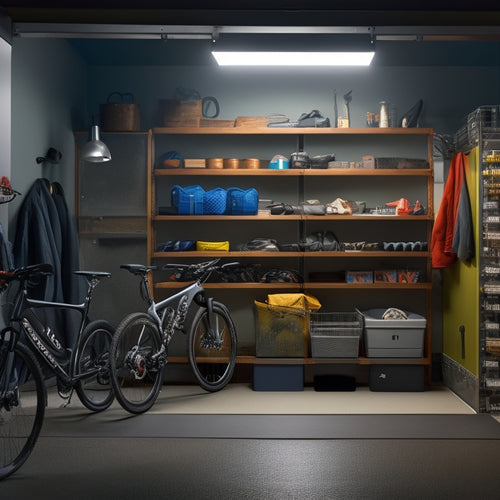
Start by identifying areas where you can install hooks, bins, or baskets to store items like bicycles, tools, or accessories. Consider using wall-mounted organizers or pegboards to hang items like bikes, lawn equipment, or extension cords. You can also use overhead storage racks for infrequently used items like seasonal decorations or out-of-season clothing.
Think creatively about how you can utilize the space above your garage door or on the ceiling to store items like kayaks, paddleboards, or even luggage. With a little creativity, you can turn your garage's vertical space into a functional and organized storage area that keeps your belongings within easy reach.
Install Shelving and Cabinetry
To further optimize your garage's storage capacity, consider installing shelving and cabinetry that cater to your specific needs, allowing you to store everything from small parts and tools to larger items like storage bins and equipment. This will help you create a DIY organization system that's tailored to your unique requirements.
Here are some key considerations to keep in mind when installing shelving and cabinetry:
-
Measure your space: Make sure you have accurate measurements of your garage to choose shelving and cabinetry that fits perfectly.
-
Choose adjustable shelves: Adjustable shelves allow you to accommodate items of varying sizes and make it easier to reorganize your storage space as needed.
-
Select durable materials: Opt for shelving and cabinetry made from tough materials that can withstand the rigors of garage storage.
- Consider a workbench: A built-in workbench can provide additional storage and create a dedicated space for projects and repairs.
Implement a "One In, One Out" Policy
Establish a strict maintenance routine by adopting a 'one in, one out' policy, where every new item you bring into your garage replaces an old one, ensuring your storage space remains balanced and clutter-free.
This decluttering strategy is a game-changer for effective space management. By implementing this policy, you'll prevent clutter from building up in the future and maintain a sense of organization.
When you bring a new item into your garage, take a moment to remove or donate an old one. This will keep your storage solutions in check and prevent your garage from becoming overwhelming.
Schedule Regular Garage Maintenance
By establishing a recurring schedule, you can secure your garage remains organized and clutter-free by dedicating a specific time each week or month to maintenance tasks. This proactive approach will help you stay on top of garage organization and prevent clutter from accumulating again.
To make the most of your maintenance schedule, focus on the following tasks:
-
Purge and declutter: Take 15-30 minutes to quickly sort through items and remove anything that's broken, expired, or no longer needed.
-
Organize and categorize: Group similar items together, and assign a designated spot for each category to maintain a sense of order.
-
Clean and dust: Spend 10-15 minutes wiping down surfaces, sweeping the floor, and dusting shelves to keep your garage clean and dust-free.
- Review and adjust: Take a few minutes to review your garage organization system and make any necessary adjustments to secure it's still working for you.
Consider a Garage Organization System
You'll find that implementing a garage organization system can take your maintenance routine to the next level, providing a structured approach to storing and managing your belongings.
With a system in place, you'll be able to maximize space and declutter efficiently, freeing up room for more important things.
Consider investing in shelving units, cabinets, and bins specifically designed for garage storage. These will help keep items off the floor and out of the way, making it easier to navigate your garage.
Additionally, label each storage container so you can quickly identify what's inside. This will save you time and frustration when searching for a specific item.
By implementing a garage organization system, you'll be able to maintain your garage's cleanliness and organization with minimal effort. You'll no longer have to worry about clutter building up, and you'll be able to focus on more important things.
With a little planning and investment, you can create a garage that's both functional and efficient.
Frequently Asked Questions
Can I Store Flammable Liquids in My Garage?
Imagine your garage engulfed in flames, fueled by flammable liquids. Don't risk it! You shouldn't store them in your garage, as it violates safety regulations. Instead, explore alternative storage solutions, like a well-ventilated outdoor shed or a designated flammable liquids storage area.
How Do I Handle Hazardous Waste Disposal?
You'll need to explore local recycling options and schedule a special pickup for hazardous waste, ensuring proper disposal of items like batteries, electronics, and chemicals, which can't be tossed in the trash.
Are There Specific Insurance Requirements for Garage Storage?
You're probably thinking, "Insurance requirements? That's the last thing on my mind when storing stuff in my garage." But, ironically, ignoring insurance coverage can lead to safety hazards and costly consequences.
Can I Park My RV or Boat in My Garage?
You'll need to check your HOA's rules, but typically, you can't park your RV or boat in your garage due to size restrictions and fire safety concerns; consider alternative RV storage options and boat parking considerations.
Are There Any Specific Permits Required for Garage Renovations?
Imagine your garage renovation as a mini-construction zone, minus the hard hat - but don't forget the permits! You'll need to acquire necessary permits, adhering to local renovation guidelines, to avoid costly re-do's and guarantee a stress-free project.
Related Posts
-
What's the Secret to Optimal Garage Shelving?
You've likely wondered why your garage still feels cluttered despite having shelves, bins, and hooks - and that's bec...
