
Storing Bulky Items: Garage Solutions for Large Appliances
You'll need a strategic plan to store bulky items like large appliances in your garage, since they require a thoughtful approach to maximize space and maintain accessibility. Start by evaluating your garage's dimensions, obstacles, and workflow to create a tailored plan. Measure the boxes to determine the best storage solutions, considering stacking capabilities and irregular shapes. Then, choose durable shelving that can accommodate various appliance sizes, and don't forget to maximize vertical storage with tall units and stackable bins. By implementing the right solutions, you'll be able to store your bulky items efficiently and discover new ways to optimize your garage space.
Key Takeaways
• Measure garage dimensions and identify obstacles to create a tailored storage plan for large appliances.
• Choose shelving with durable materials, suitable weight capacity, and adjustable features to accommodate various appliance sizes.
• Maximize vertical storage with tall units, stackable bins, and ceiling-mounted racks to optimize garage space.
• Install sliding shelves with sufficient depth and weight capacity for easy access to bulky items.
• Label and organize storage systems using color coding, digital inventory, and custom solutions for unique or oversized items.
Assessing Your Garage Space
Measure your garage's dimensions and identify any obstacles, such as pillars, windows, or uneven flooring, to determine how much usable space you have for large appliances. This critical step will help you maximize your garage organization and space utilization.
Take precise measurements of the length, width, and height of your garage, including any alcoves or recesses. Note the location of doors, windows, and any other features that might impact your storage plans.
Next, assess the condition of your garage floor. Are there any cracks, unevenness, or oil stains that could affect the placement of your appliances? Consider the weight capacity of your floor and whether it can support the heavy appliances you plan to store.
Think about the workflow and traffic patterns in your garage. Will you need to create a clear path for moving large items in and out of storage? By carefully evaluating your garage's dimensions and obstacles, you'll be able to create a tailored plan for storing your bulky appliances efficiently and effectively.
Measuring Large Appliance Boxes
When measuring large appliance boxes, you'll need to assess the box size, ensuring it fits comfortably in your garage.
You'll want to take precise measurements to guarantee a snug fit, avoiding any potential awkwardness or overcrowding.
Box Size Considerations
You'll need to precisely determine the box size of your large appliances to guarantee a proper fit in your garage. This involves measuring the length, width, and height of the box to make sure it fits comfortably in the allocated space. Don't forget to ponder the box weight, as heavier boxes may require additional support or specialized shelving to prevent damage or collapse.
When measuring the box size, think about stacking capabilities. If you plan to store multiple boxes on top of each other, consider if the boxes are designed for stacking and can support the combined weight. Check the manufacturer's guidelines for recommended stacking heights and weights to avoid accidents.
Keep in mind that irregularly shaped boxes may require custom storage solutions. Take precise measurements to create a tailored storage plan that maximizes your garage space. By precisely measuring your large appliance boxes, you'll be able to create a safe and efficient storage system that meets your specific needs.
Measuring for Fit
With your box size considerations in mind, it's essential to take precise measurements of your large appliance boxes to guarantee a snug fit in your garage. Take out your tape measure and carefully record the length, width, and height of each box.
Don't forget to measure the clearance space around each appliance, considering factors like ventilation and maintenance access. This will make sure you have adequate space optimization and storage solutions.
When measuring, consider the installation tips for each appliance. For example, refrigerators often require extra clearance for the doors to open freely. Make a note of any specific requirements to avoid last-minute adjustments.
Additionally, measure the garage's doorways, corners, and any obstacles that might impact the box's placement. This attention to detail will save you time and frustration during installation.
Labeling the Boxes
Labeling Boxes:
- Label each box clearly with its contents and corresponding measurements.
- Use a color-coding system to categorize boxes by appliance type or room association.
- Example: Blue labels for kitchen appliances, red labels for laundry equipment.
Creating a Digital Inventory:
- Create a spreadsheet or use a note-taking app to log each box's contents, measurements, and location.
- A digital record helps you quickly search for specific items without physically checking each box.
- Organized labeling and inventory system maximize storage capacity and save time searching for appliances or parts.
Choosing the Right Shelving
Determine your shelving needs by measuring the dimensions of your large appliances and the available space in your garage to guarantee a precise fit. You'll want to ponder the weight capacity of the shelves to make sure they can support your heavy appliances. Look for adjustable shelves that can be customized to fit your specific needs. This will give you the flexibility to accommodate appliances of different sizes.
When selecting shelving, prioritize heavy-duty, durable materials that can withstand the weight and demands of your appliances. Avoid flimsy or lightweight materials that may collapse or break under the strain. Instead, opt for sturdy shelves made from metal, wood, or high-quality plastic.
Ponder the finish and coating of the shelves as well, as this can impact their durability and resistance to corrosion. By choosing the right shelving for your large appliances, you'll be able to store them safely and efficiently, freeing up valuable space in your garage.
Maximizing Vertical Storage
Take advantage of your garage's ceiling height by installing tall, vertical storage units that can hold your largest appliances, keeping them off the floor and freeing up valuable space. This is especially important for bulky items like refrigerators, freezers, and washing machines, which can be awkward to store. By utilizing vertical organization, you can create space-saving solutions that keep your garage organized and clutter-free.
When selecting vertical storage units, consider the weight capacity and durability of the materials. Look for units with adjustable shelves and sturdy frames that can support the weight of your appliances.
You can also get creative with storage by using stackable bins, baskets, or hooks to hang items like hoses, cords, or accessories.
Using Ceiling Mounted Racks
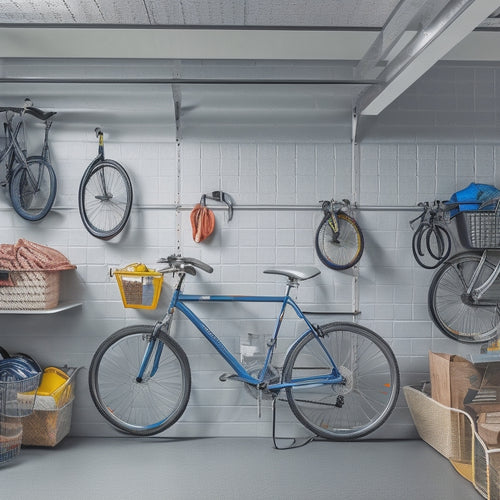
By installing ceiling-mounted racks, you can suspend your bulky appliances, such as bicycles, lawn equipment, or even infrequently used kitchen gadgets, from the ceiling, freeing up floor space and keeping them out of the way. This garage storage solution is perfect for maximizing your floor space utilization.
With pulley systems and wall-mounted hooks, you can easily lift and store heavy items, ensuring they're secure and accessible when needed.
To optimize your ceiling-mounted racks, consider the weight capacity and size of the items you want to store. You can also use portable storage bins or baskets to store smaller items like seasonal decorations or out-of-season clothing. By doing so, you'll keep your garage floor clear and create a more organized space.
Additionally, ceiling-mounted racks can be adjusted to accommodate different sizes of items, making them a versatile storage solution. By taking advantage of your garage's vertical space, you can create a more efficient and functional area that's perfect for storing your bulky appliances and more.
Sliding Shelves for Easy Access
As you consider sliding shelves for your garage, you'll want to think about the shelf depth options that will best accommodate your large appliances.
Will you need deeper shelves for bulkier items, or shallower ones for smaller appliances?
Shelf Depth Options
Choosing the appropriate shelf depth is crucial when it comes to accommodating large appliances, such as refrigerators or washing machines, and sliding shelves can greatly facilitate access to these items.
When selecting a shelf depth, you'll want to take into account the size of your appliances and the space available in your garage. Be sure to measure your appliances and the clearance around them to make sure you have enough room to slide them in and out easily.
Shelf depth considerations also involve weight capacity. You'll need to choose shelves that can support the weight of your appliances, as well as any additional items you plan to store. Look for shelves with a sturdy construction and a weight capacity that meets your needs.
If you have unique storage requirements, explore custom shelving options with adjustable racks. These can be tailored to fit your specific needs and provide maximum storage flexibility.
Smooth Slide Operation
You'll appreciate the convenience of sliding shelves when you need to access your large appliances, as they enable you to effortlessly slide them in and out without straining or struggling. This feature is especially important when dealing with bulky items that are heavy or hard to handle.
With sliding shelves, you can easily access your appliances without having to worry about door clearance or maneuvering tight spaces.
When choosing sliding shelves, take into account the weight capacity of the shelves and the appliances you plan to store. Make sure the shelves can support the weight of your appliances, and that they're designed to handle the load.
You'll also want to take into account the type of slide mechanism used, as some are designed for heavier loads than others. Look for shelves with ball-bearing slides or soft-close mechanisms for smooth and quiet operation.
Labeling and Organizing Systems
By implementing a labeling and organizing system, you can easily identify where each large appliance is stored in your garage, making it simpler to access and maintain them. A well-organized system allows you to quickly locate the appliance you need, saving you time and effort.
To create an effective system, consider using color coding and shelf dividers to categorize and separate your appliances. For instance, you can assign a specific color to each category of appliances, such as blue for cleaning equipment and red for power tools. This visual system makes it easy to identify where each appliance belongs.
In addition to physical labels, consider creating a digital inventory of your appliances. This can be as simple as a spreadsheet or a note-taking app on your phone. This digital record allows you to keep track of the appliances you have, their condition, and when they need maintenance.
Use bin labels to identify the contents of each storage bin, making it easy to find what you need. By combining these labeling and organizing systems, you'll be able to efficiently store and manage your large appliances in your garage.
Custom Solutions for Unique Items
Designing custom solutions for unique items, such as a riding lawn mower or a large generator, requires careful consideration of their specific storage needs and the available space in your garage. You'll need to think creatively about how to accommodate these bulky items while keeping them accessible and organized.
One approach is to invest in custom crating, which can be tailored to fit your item's exact dimensions and provide protection from dust and damage. Alternatively, you can explore creative containers, such as repurposed pallets or wooden crates, to store your items. Consider the weight and size of your item, as well as any specific requirements, like ventilation or drainage.
Frequently Asked Questions
Can I Store Bulky Items in a Garage With a Sloping Floor?
You're wondering if a sloping floor will hinder your storage plans, but don't let it discourage you - with clever maximizing of space opportunities, you can cleverly overcome sloping floor challenges and store bulky items with ease.
How Do I Protect My Garage Floor From Heavy Appliance Weight?
To protect your garage floor from heavy appliance weight, you'll want to distribute the weight evenly and consider flooring options like epoxy-coated concrete or interlocking tiles that can withstand heavy loads and provide superior floor protection.
Are There Any Specific Shelving Materials for Humid Garage Environments?
"As you navigate the humid garage jungle, you'll want shelving that's as tough as you are. Opt for rust-resistant materials like stainless steel or epoxy-coated shelves, and don't forget climate control to keep moisture at bay."
Can I Install Shelving and Storage Systems Myself or Hire a Pro?
You can install shelving and storage systems yourself, but consider hiring a pro if you're short on time or skills; compare DIY costs (around $100-$500) to professional installation (around $500-$2,000) to make an informed decision.
How Often Should I Clean and Maintain My Garage Storage Systems?
"Like a well-oiled machine, your garage storage systems need regular tune-ups! You should clean and maintain them every 2-3 months to prevent clutter buildup. Create a schedule to stay on track and keep your organization tips and storage solutions in top shape."
Related Posts
-
7 Best Garage Storage Solutions for Busy Families
You're tired of a cluttered garage, and it's time to reclaim your space. As a busy family, you need storage solutions...
