
Storing Seasonal Items: A Garage Storage Guide
You're about to transform your cluttered garage into a well-organized hub for storing seasonal items. Start by evaluating your garage's storage needs, grouping similar items together, and measuring their dimensions to calculate the required space. Purge and categorize seasonal items, keeping only what's in good condition and serves a purpose. Choose the right storage containers, considering size, material, and durability, and maximize vertical space with shelving, cabinets, or bins. By implementing these strategies, you'll create a functional and efficient storage system. Now, discover how to take your garage organization to the next level.
Key Takeaways
• Conduct a space evaluation to determine storage requirements and prioritize storage needs based on item size and frequency of use.
• Categorize seasonal items into keep, donate/sell, and discard piles, and group similar items together for efficient organization.
• Choose storage containers that consider factors like size, material, and durability, and use labels or color-coding for easy identification.
• Maximize vertical and ceiling storage space by installing upper level shelves, storage racks, and hooks, and utilizing hanging storage solutions.
• Designate specific areas for seasonal items, use zoning and labeling strategies, and schedule regular maintenance sessions to sustain an organized space.
Assessing Your Garage Storage Needs
Take inventory of your garage's current contents to identify what you need to store and how much space you'll require for each item. This space evaluation will help you determine the most efficient storage solutions.
Start by grouping similar items together, such as tools, sports equipment, and seasonal decorations. Measure the dimensions of each group to calculate the total space needed. Consider the frequency of use and the size of each item to prioritize your storage needs.
Next, apply some organization tips to optimize your garage's layout. Plan the layout to accommodate your most frequently used items in easy-to-reach locations. Consider installing shelving, cabinets, or bins to keep items off the floor and out of the way.
Begin the decluttering process by removing any unnecessary items, donating or recycling what you can. This will help you focus on storing only what's essential.
Purge and Categorize Seasonal Items
Now that you've assessed your garage storage needs, it's time to tackle your seasonal items.
You'll need to sort through them, weeding out anything that's broken, outdated, or no longer useful.
Next, group similar items together, which will help you identify the storage solutions you'll need to keep them organized and accessible.
Sort and Weed Out
As you stand amidst the clutter, categorize seasonal items into three piles: keep, donate/sell, and discard, to create a solid foundation for your garage storage makeover. This pivotal step will help you separate the useful from the useless, making it easier to decide what stays and what goes.
Be ruthless: if you haven't used it in the past year, it's probably safe to get rid of it.
Consider hosting a donation drive or participating in a declutter challenge to stay motivated and make the process more enjoyable.
Keep only items that are in good condition and serve a purpose, such as seasonal decorations, out-of-season clothing, or rarely used kitchen gadgets.
Group Similar Items
With your sorted piles in place, categorize similar seasonal items into smaller groups, such as winter sports gear, summer toys, or holiday decorations, to create a sense of order and make it easier to determine what you need to store. This grouping strategy will help you achieve effective item organization and make the most of your garage storage space.
Start by grouping items that belong together, like all winter clothing or summer outdoor furniture. This will enable you to see what you have and what you can store together.
For instance, you can store all your winter sports gear, such as skis, snowboards, and boots, in one area, and all your summer toys, like bikes, pool floats, and beach balls, in another. By doing so, you'll be able to identify what storage solutions you need, like bins, shelves, or hooks, to keep your items organized and easily accessible.
A well-planned grouping strategy will simplify your storage process, saving you time and effort in the long run.
Identify Storage Needs
Take stock of your seasonal items and start purging items that are broken, outdated, or no longer used to free up valuable storage space in your garage. This is an essential step in identifying your storage needs and creating effective storage solutions. By getting rid of items that are no longer useful, you'll be able to focus on the items that are worth storing.
Consider the following items when purging your seasonal items:
- Holiday decorations that are no longer used or are broken
- Outdated or broken seasonal equipment, such as summer toys or winter sports gear
- Seasonal clothing that no longer fits or is no longer worn
Once you've purged your seasonal items, categorize them into groups, such as holiday decorations, summer toys, or winter sports gear. This will help you determine the type of storage solutions you need and where they should be located in your garage.
Choosing the Right Storage Containers
You'll need to choose storage containers that fit your specific garage storage needs, considering factors like size, material, and durability.
With so many container options available, assessing your organizing solutions and selecting the right ones for your seasonal items is crucial. For example, if you have bulky winter gear, think about large, robust containers with wheels for easy mobility.
Conversely, smaller items like holiday decorations can be stored in clear, stackable bins for efficient use of space.
When picking containers, remember some useful space-saving tips. Search for containers with flat tops and bottoms to maximize vertical storage, and think about using labels or color-coding to quickly identify what's inside.
Labeling methods can also aid in finding what you need promptly, reducing clutter and frustration. Moreover, consider using dividers or compartments within larger containers to separate items and prevent them from getting mixed up.
Maximizing Vertical Storage Space
Now that you've chosen the right storage containers, it's time to think vertically. You'll want to make the most of your garage's ceiling height to store items that are less frequently used, freeing up floor space for more essential items.
Upper Level Shelves
Install upper level shelves to maximize the often-wasted vertical space above your garage's main storage areas, freeing up valuable floor space for larger items. This is especially useful for storing seasonal decorations, out-of-season clothing, or infrequently used tools.
When planning your upper level shelves, keep in mind the following essential considerations:
-
Safety precautions: Guarantee the shelves are securely attached to the wall or ceiling to prevent collapse or falling objects. Wear protective gear, like gloves and safety glasses, during installation.
-
Installation tips: Measure your garage's ceiling height and door openings to determine the ideal shelf size and placement. Use sturdy brackets and screws to support the shelves.
-
Weight capacity and accessibility concerns: Calculate the weight capacity of your shelves based on the items you plan to store. Consider installing shelves with adjustable heights or using step stools to ensure easy access to items.
Storage Racks and Hooks
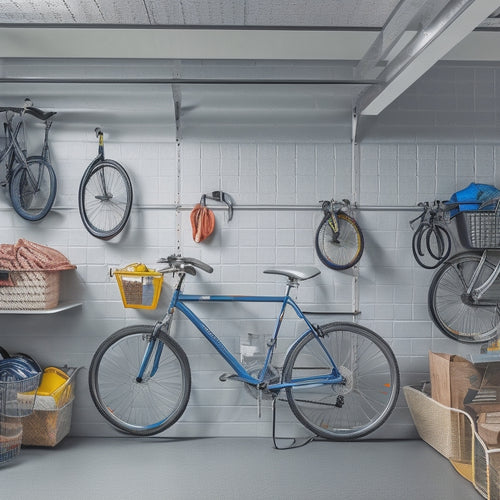
After maximizing your garage's upper level shelves, turn your attention to the walls and ceiling. Storage racks and hooks can be strategically placed to further capitalize on vertical storage space. Wall mounted racks are perfect for storing items like bikes, tools, and seasonal decorations, keeping them organized and out of the way.
You can also install ceiling hooks to hang items such as kayaks, paddleboards, or even luggage, freeing up floor space.
Consider installing hanging storage solutions like bins, baskets, or shelves to store items like camping gear, sports equipment, or out-of-season clothing. These shelving solutions will keep your items organized, protected, and easily accessible.
When choosing storage racks and hooks, make sure to select ones that are sturdy, durable, and designed for the weight and type of items you plan to store.
Utilizing Ceiling Storage Options
By utilizing the often-underutilized space above your garage's workbenches and shelves, you can create a wealth of storage opportunities by utilizing ceiling storage options. This often-overlooked area can be optimized with customized solutions tailored to your specific needs. You can choose from DIY options, such as installing hooks or bins, or opt for more elaborate systems like overhead storage racks.
When selecting a ceiling storage solution, it's crucial to take into account the following:
-
Weight capacity: Make sure the storage system can handle the weight of your items to prevent damage or collapse.
-
Safety considerations: Choose a system that allows easy access and retrieval of items, and think about installing safety features like soft-close mechanisms.
-
Clearance: Leave enough room between the storage system and the ceiling to accommodate items of varying sizes and to ensure easy installation and removal.
Creating Zones for Seasonal Items
You can maximize your garage's storage potential by designating specific areas for seasonal items, keeping them organized and easily accessible when you need them. This zone organization approach allows you to optimize your space and make the most of your garage's storage capacity.
By assigning a dedicated zone for each season, you can store items like winter clothing, summer toys, or holiday decorations in a logical and systematic way.
To implement this strategy, start by categorizing your seasonal items into groups based on the time of year they're used. Then, allocate a specific area of your garage for each group, considering factors like frequency of use, size, and weight.
For example, you might designate a section near the front of your garage for winter gear, making it easy to grab your coat or gloves on a chilly morning.
Labeling and Signage Best Practices
Effective labeling and signage play a crucial role in maintaining your garage's organizational system. They enable you to quickly identify what's stored in each zone and locate specific items at a glance. This is especially important when storing seasonal items. You'll likely have a variety of bins, boxes, and containers holding everything from holiday decorations to summer sports equipment.
To guarantee your labels and signs are effective, follow these best practices:
-
Use color coded labels to categorize items by season or type. This makes it easy to distinguish between winter gear and summer toys.
-
Keep signage clear and concise, using large, bold font to ensure you can read labels from a distance.
-
Place labels and signs in strategic locations, such as on the front of bins or above storage zones. This way, you can quickly see what's inside without having to dig through everything.
Seasonal Item Rotation Strategies
As winter gives way to summer, and summer yields to fall, your garage storage system needs to adapt, rotating seasonal items in and out of prime storage spaces to guarantee easy access and optimize available space.
To achieve efficient rotation, categorize your seasonal items into three groups: winter, summer, and year-round. Store out-of-season items in labeled bins or containers, securing item protection from dust, moisture, and pests. Consider using stackable bins or shelves to maximize vertical space.
When rotating items, prioritize those used most frequently, placing them in easily reachable areas. For example, as summer approaches, move summer sports equipment, outdoor furniture, and gardening tools to prime storage spaces. Meanwhile, store winter gear, such as snow shovels and winter clothing, in labeled bins or containers.
Maintaining Organization Over Time
To keep your garage storage system running smoothly, schedule regular maintenance sessions to sustain that your space remains organized and clutter-free over time. This will guarantee that your seasonal items stay easily accessible and your garage remains a functional space.
Regular maintenance involves checking your labeling systems to confirm they're still accurate and easy to read. You may need to update labels as your storage needs change.
Additionally, perform container maintenance by cleaning and inspecting your storage bins for damage or wear. This will help prevent damage to your stored items and keep your containers in good condition.
Some key maintenance tasks to focus on include:
-
Checking expiration dates: Make sure you're not storing expired or outdated items that can take up valuable space.
-
Reorganizing as needed: Adjust your storage layout to accommodate changes in your seasonal item collection or storage needs.
-
Pest control: Regularly inspect your storage areas for signs of pests or rodents that can harm your stored items.
Related Posts
-
7 Best Garage Storage Solutions for Busy Families
You're tired of a cluttered garage, and it's time to reclaim your space. As a busy family, you need storage solutions...
