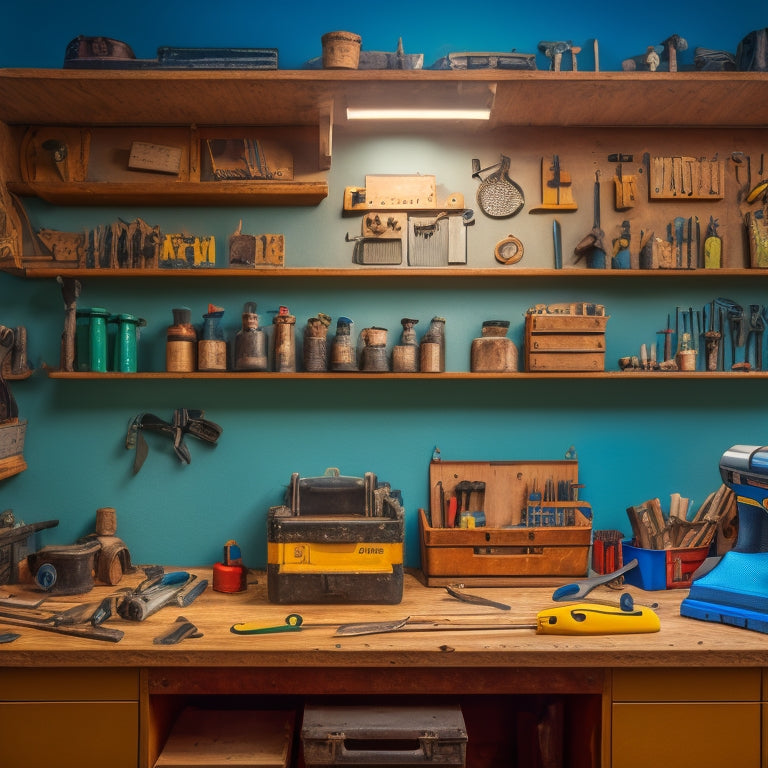
Tool Maintenance Tips for Longevity
You can greatly extend the life of your tools by adopting a few simple maintenance habits. Start by storing them in a clean, dry place to prevent moisture damage. Regularly clean your tools to remove dirt and grime, and sharpen blades to maintain their effectiveness. Protect metal tools from rust by applying a rust-inhibiting coating or storing them in a dry place. Inspect your tools regularly for signs of wear and address issues promptly. By following these tips, you'll be well on your way to maximizing the lifespan of your tools - and there's even more you can do to keep them in top condition.
Key Takeaways
• Store tools in a clean, dry place to extend their lifespan and prevent moisture damage.
• Clean tools regularly to remove dirt and grime, and sharpen blades to maintain effectiveness.
• Protect metal tools from rust with rust-inhibiting coatings or dry storage to prevent corrosion.
• Inspect tools regularly for signs of wear and address issues promptly to prevent further damage.
• Adopt simple maintenance habits, such as lubricating moving parts, to extend tool life and keep them in top condition.
Essential Storage Practices
Storing your tools in a clean, dry place is crucial to maintaining their quality and extending their lifespan. You don't want your hard-earned cash going down the drain because of rusty or damaged tools.
Organizing tools in a neat and tidy manner will also save you time and frustration when you need them. Moisture prevention is key, so make sure your storage space is dry and well-ventilated. Avoid storing tools in humid basements or damp garages. Instead, opt for a dry room or a waterproof storage container.
Cleaning and Sharpening Tips
To keep your tools performing at their best, clean them regularly to remove dirt, grime, and other substances that can dull blades and clog motors. A clean tool is a happy tool!
| Tool Type | Cleaning Tips |
|---|---|
| Hand Tools | Use a soft cloth and mild soap to wipe away dirt and grime |
| Garden Tools | Hose down with water and let air dry to prevent rust |
| Power Tools | Vacuum crevices and use a damp rag for external dust |
| Blades | Sharpen regularly and replace if chipped |
| All Tools | Dry thoroughly before storage to prevent rust |
Protecting Against Rust and Wear
You'll want to take extra steps to safeguard your tools from rust and wear, especially after cleaning and sharpening, to guarantee they remain in top condition. Preventing corrosion is key to extending the lifespan of your tools.
For metal tools, apply a rust-inhibiting coating or store them in a dry place. You can also use silicone-based lubricants to protect moving parts from wear. Additionally, regularly inspect your tools for signs of rust or wear and address them promptly. Don't let rust creep in – it's a tool-killer!
Frequently Asked Questions
How Often Should I Maintain My Tools to Prevent Damage?
You should schedule regular checks to catch potential issues before they hit your damage threshold, ideally every 1-3 months, depending on tool usage, to prevent those pesky problems from becoming major headaches down the line!
Can I Use Household Cleaners to Clean My Tools?
Don't even think about using household cleaners on your tools - they can trigger chemical reactions that damage materials. Instead, stick to gentle soap and water or specialized tool cleaners to guarantee material compatibility and a rust-free life.
What's the Best Way to Organize My Toolbox for Easy Access?
You're tired of digging through a messy toolbox! Organize with a system: categorize tools by type, store them in designated compartments, and label everything - it's like a party for your tools, and you're the host with the most!
How Do I Know When It's Time to Replace a Tool Instead of Repairing?
You'll know it's time to replace a tool when wear patterns become obvious, repairs cost more than the tool's worth, or you're spending more time fixing than using it - it's time to cut your losses and get a new one!
Are There Any Specific Maintenance Tasks for Tools Used in Harsh Environments?
You're working in harsh environments? Yeah, that's tough on tools! Make sure to prioritize corrosion protection, and consider environmental testing to identify vulnerabilities. Then, adjust your maintenance routine accordingly to keep those tools in top shape!
Related Posts
-
What's the Best Way to Store Your Bikes?
You'll need a strategic plan to store your bikes efficiently, considering factors like garage space, bike type, and d...
-
Accessible Garage Organization for All Abilities
You deserve a garage that's accessible and organized, where your abilities aren't limited. To achieve this, you'll ne...
-
What Garage Organization Works for Limited Mobility?
You can create a garage organization system that works for you, even with limited mobility, by incorporating adaptabl...
