
What's the Fastest Way to Declutter My Garage?
To declutter your garage quickly, start by setting a realistic goal and timeline, then adopt a decluttering mindset and visualize your ideal layout. Next, purge unwanted items by clearing out things that no longer serve a purpose, donating, recycling, selling, or trashing them. Organize items into categories, assigning a home for each, and use storage containers effectively to maximize vertical space. Install shelving and hooks, and designate zones for different activities. Finally, maintain your newly organized garage by setting aside time for weekly tidying and reassessing storage needs. Now, get ready to take your garage transformation to the next level.
Key Takeaways
• Set a realistic goal and establish a decluttering timeline to stay focused and motivated throughout the process.
• Clear out items not serving a purpose by donating, recycling, selling, or trashing them to make room for what's truly needed.
• Sort like items together to reduce stress and increase productivity, and assign a designated spot for each item to maintain organization.
• Utilize effective storage container use by choosing the right size, labeling, and maximizing vertical space to keep items off the floor.
• Create functional layout with activity zones to enhance productivity and efficiency, and set aside time for weekly tidying to maintain organization.
Prepare for the Decluttering Process
Before diving into the nitty-gritty of garage decluttering, take a few minutes to mentally prepare yourself for the task ahead by setting a realistic goal and gathering essential supplies. Define what you want to achieve, whether it's freeing up space for a workshop or simply getting rid of clutter. Establish a decluttering timeline that suits your schedule, ensuring you have enough time to tackle the task without feeling overwhelmed.
Adopt a decluttering mindset by visualizing your ideal garage layout and identifying areas that need the most attention. Consider sorting strategies, such as categorizing items by type or frequency of use. This will help you stay focused and make decisions about what to keep, donate, or discard.
Gather necessary supplies, including storage solutions like bins, baskets, and labels. Having these essentials on hand will save you time and energy in the long run.
With a clear goal, timeline, and supplies in place, you'll be well-prepared to tackle the decluttering process and transform your garage into a functional and organized space.
Purge Unwanted Items First
With your goal and supplies in place, it's time to tackle the heart of the decluttering process: clearing out items that no longer serve a purpose in your garage. You'll be surprised at how much space you can free up by getting rid of unwanted items.
Start by going through each item and asking yourself, 'Do I really need this?' or 'When was the last time I used this?' Be honest with yourself, and if the answer is no, it's time to let it go.
Donate unused items that are still in good condition, recycle old items that can't be donated, sell unwanted items that have value, and trash broken items that can't be fixed.
Don't hold onto items 'just in case' or because you feel guilty getting rid of them. Remember, the goal is to declutter your garage, not to keep everything you've ever owned.
Organize Items Into Categories
Now that you've purged your unwanted items, it's time to organize what's left into categories.
You'll want to sort like items together, such as all gardening tools or sports equipment, so you can see what you have and where it should be stored.
Sort Like Items Together
You'll make significant progress in decluttering your garage by categorizing items into groups, such as tools, sports equipment, and seasonal decorations. This step is vital in creating a sense of order and making it easier to decide what to keep, donate, or discard.
Here are 4 key benefits of sorting like items together:
-
Saves time: You'll quickly locate items when they're grouped together.
-
Reduces stress: A clutter-free garage is a more peaceful space.
-
Increases productivity: You'll be more efficient when working on projects with organized tools.
- Enhances safety: Reduces tripping hazards and injuries from clutter.
To take your sorting to the next level, consider implementing a labeling system and using storage bins to keep items off the floor. You can also explore color coding and shelving options to maximize your garage's vertical space.
Purge Unwanted Items First
To free up space and focus on what's truly important, start by getting rid of items that are broken, outdated, or no longer serve a purpose in your garage. Be ruthless – if you haven't used it in the past year, it's probably safe to let it go.
Sort items into three piles: keep, donate/sell, and trash. Consider hosting a garage sale or participating in local donation drives to give your gently used items a new home. For items that are truly unusable, toss them in the trash or recycle bin.
As you purge, keep an eye out for items that can be repurposed or reused. Old containers can become storage bins, and broken tools might've salvageable parts. Set aside items that require special disposal, such as batteries or electronics, and research local guidelines for their proper disposal.
Designate Zones for Storage
Sort your remaining items into categories, such as tools, sports equipment, and seasonal decorations, and assign each group a designated zone within your garage. This will help you maintain organization and make it easier to find what you need when you need it.
Here are some zones to take into account:
-
Tool zone: Designate a specific area for your tools, such as a pegboard or a tool chest, and label storage bins for easy access.
-
Sports equipment zone: Create a zone for your sports gear, like bikes, balls, and protective gear, and take into account installing hooks or bins to efficiently store them.
-
Seasonal decoration zone: Assign a zone for your seasonal decorations, such as Halloween or Christmas decorations, and use labeled storage bins to keep them organized.
- Miscellaneous zone: Designate a zone for miscellaneous items, like luggage or camping gear, and use bins or shelves to keep them organized.
Assign a Home for Each Item
Now that you've categorized your garage items, it's time to assign a home for each one.
You'll need to designate a specific spot for every item, considering how frequently you use it and how easily you want to access it.
Designate a Spot
Assign a specific location for each item, ensuring that everything has a designated place where it will be kept, making it easier to find and maintain order in your garage. This step is pivotal in your decluttering journey, as it helps you maximize your storage solutions and optimize space utilization.
Here are 4 key areas to focus on when designating a spot for each item:
-
Tool zone: Assign a specific area for your tools, such as a pegboard or a tool chest, to keep them organized and within reach.
-
Seasonal storage: Designate a spot for seasonal items like holiday decorations, out-of-season clothing, or summer toys to keep them out of the way but still accessible.
-
Sports equipment: Create a designated area for sports equipment, like bikes, balls, or skateboards, to keep them organized and prevent clutter from building up.
- Workstation: Set up a workstation for projects, complete with a workbench, storage for supplies, and a trash can, to keep your workspace organized and efficient.
Categorize and Group
With your garage spaces designated, you're ready to categorize and group similar items together, making it easier to find a home for each item and maintain your newly organized garage. Start by grouping items into categories, such as tools, sports equipment, and seasonal decorations.
Within each category, use a labeling system to identify what's inside containers or on shelves. This visual organization will help you quickly locate what you need.
To take it a step further, consider color coding your categories. For example, use blue labels for tools and green labels for sports equipment. This will create a visually appealing and easy-to-follow system.
When choosing storage solutions, think about the items you're storing and how often you'll need to access them. Use bins, baskets, and shelves that are easy to reach and won't obstruct your workflow.
Use Storage Containers Effectively
You'll maximize your garage's storage capacity by choosing containers that fit snugly into corners, against walls, or under shelves, and labeling them so you can easily identify what's inside. This will help you make the most of your available space and keep similar items organized together.
Here are some tips to keep in mind:
-
Choose the right size: Select containers that fit the items you need to store, and consider using stackable containers to maximize vertical space.
-
Label containers: Use clear and descriptive labels so you can quickly find what you need, and consider color-coding labels by category or type of item.
-
Store heavy items at the bottom: This will prevent containers from toppling over and make it easier to access items at the top.
- Keep frequently used items accessible: Store items you use regularly in easy-to-reach locations, and reserve harder-to-reach areas for less frequently used items.
Install Shelving and Hooks
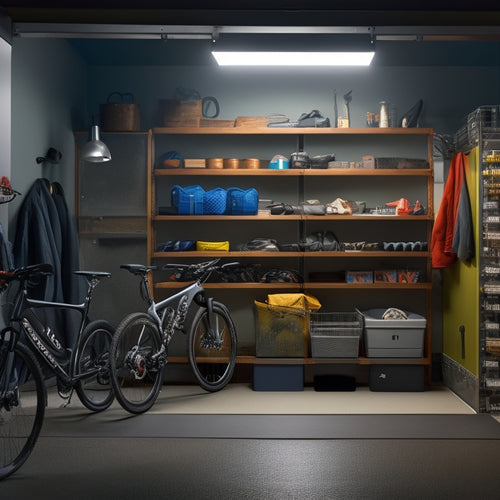
By setting up shelving and hooks, you're creating a personalized storage system that takes advantage of your garage's vertical space and keeps frequently used items within easy reach. This DIY project is an essential step in achieving top-notch garage organization.
Start by evaluating your storage needs and identifying the items you use most often, such as bikes, tools, or sports equipment. Then, choose shelving and hooks that fit your specific requirements. Consider adjustable shelving to accommodate items of varying sizes.
Hooks are ideal for hanging items like bikes, helmets, or bags, keeping them organized and freeing up floor space. When selecting hooks, make sure they're sturdy enough to hold the weight of the items you'll be hanging.
Install shelving and hooks in a way that maximizes garage efficiency, leaving enough space for easy access and movement. With a well-planned storage system, you'll be able to find what you need quickly, and your garage will become a more functional and effective space.
Utilize Vertical Space Wisely
Take advantage of your garage's often-wasted vertical space by installing overhead storage racks, which can hold infrequently used items like seasonal decorations, out-of-season clothing, or camping gear. This will help keep your floor and countertops clear, making it easier to move around and find what you need.
Here are some ways to maximize your garage's vertical space:
-
Install vertical shelving: Perfect for storing bins, baskets, or boxes containing items like tools, sports equipment, or automotive supplies.
-
Use hanging hooks: Hang items like bikes, lawn equipment, or extension cords from the ceiling or walls to free up floor space.
-
Opt for overhead storage: Store items like luggage, camping gear, or out-of-season decorations in overhead storage bins or containers.
- Incorporate wall organization: Use wall-mounted shelves, cabinets, or pegboards to store items like cleaning supplies, gardening tools, or accessories.
Designate a Zone for Each Activity
Now that you've maximized your garage's vertical space, it's time to create a functional layout by designating a zone for each activity, ensuring everything has its own dedicated area and making it easier to focus on specific tasks. This will help you achieve efficiency in your workflow and reduce clutter.
Identify the different activities you'll be performing in your garage, such as tool storage, workbench, and parking. Create distinct zones for each activity, and organize the items needed for each task within their respective zones.
For instance, designate a zone for your workbench and store all your tools and materials nearby. This zone organization will enhance your productivity, as you'll spend less time searching for items and more time on the task at hand.
Maintain Your Newly Organized Garage
You'll need to establish habits and routines to maintain your newly organized garage, ensuring that clutter doesn't accumulate again and your space remains functional and efficient. To achieve this, follow these essential maintenance tips:
-
Set aside time each week to tidy up and put away items that are out of place.
-
Implement a labeling system to identify where items belong, making it easier to put them back.
-
Optimize your space by regularly reassessing your storage needs and adjusting your layout accordingly.
- Practice seasonal rotation by storing out-of-season items to free up space and reduce clutter.
Related Posts
-
What's the Secret to Optimal Garage Shelving?
You've likely wondered why your garage still feels cluttered despite having shelves, bins, and hooks - and that's bec...
