
What's the Secret to a Clutter-Free Family Garage?
To accomplish a clutter-free family garage, begin by evaluating the space, noting problem areas and dimensions. Sort items into keep, donate, or sell piles, and categorize remaining items by purpose and storage needs. Be decisive about purging unwanted items. Then, optimize vertical storage with shelves, hooks, and bins, and establish zones for specific activities. Utilize concealed areas like above cabinets and inside hollow doors for additional storage. By implementing these strategies, you'll be well on your way to an orderly garage that enhances your efficiency and reduces tension. Now, take the next step to discover more techniques to maintain your newly organized space.
Key Takeaways
• Assess your garage space by identifying trouble spots, main zones, and dimensions to create a functional layout.
• Sort and purge items by categorizing them into keep or donate/sell, and storing them in labeled bins and groups.
• Maximize vertical storage by installing shelves, hooks, and bins that reach the ceiling to triple storage capacity.
• Create zones for efficiency by organizing space into distinct areas for specific activities, labeling each zone, and utilizing bins and shelves.
• Utilize hidden storage areas like above cabinets, beneath workbenches, or inside hollow doors to keep clutter at bay.
Assessing Your Garage Space
Take stock of your garage's current state by standing in the center of the room and making a slow, 360-degree turn to absorb the layout, clutter, and overall condition of the space. As you take in the scene, notice the areas that catch your attention – the piles of boxes, the scattered tools, or the mysterious stains on the floor. Make a mental note of these trouble spots, as they'll be pivotal in your optimization plan.
Next, identify the main zones in your garage layout. Are there designated areas for parking, storage, or workspaces? Are there any obstacles, like pillars or uneven flooring, that might affect your space optimization?
Take note of the dimensions of your garage, including the width, length, and height of the space. This will help you determine the maximum capacity for storage and furniture.
Sorting and Purging Essentials
Now that you've assessed your garage space, it's time to roll up your sleeves and get to work on sorting and purging essentials.
You'll start by clearing out the clutter that's accumulated over time, and then categorize the remaining items into groups that make sense for your family's needs.
Clear Out the Clutter
Your garage's cluttered landscape begins to shift as you tackle the essential first step: sorting and purging the overwhelming accumulation of items that have turned your space into a chaotic storage unit. You're about to uncover the hidden potential of your garage by clearing out the clutter. It's time to get ruthless – be honest with yourself about what you need and what you can let go of.
| Category | Keep | Donate/Sell |
|---|---|---|
| Sports Equipment | Gently used bikes, functional gear | Broken or outdated equipment |
| Tools | Frequently used, in good condition | Duplicates, rusty, or broken |
| Seasonal Decorations | Items still in good condition, used annually | Broken, outdated, or unused |
| Storage Containers | Sturdy, functional containers | Broken, rusty, or worn out |
| Miscellaneous | Items with sentimental value, still useful | Trash, broken, or useless items |
Categorize Remaining Items
As you're left with a more manageable amount of items, categorize the remaining essentials into groups based on their purpose, frequency of use, and storage requirements. This step is essential in creating a clutter-free garage that's functional and easy to maintain.
Here are some categories to ponder:
-
Seasonal decorations: Store out-of-season decorations in labeled bins to free up space and reduce clutter.
-
Organizing tools: Group tools like hammers, screwdrivers, and pliers together and store them in a designated area, such as a pegboard or toolbox.
-
Storing sports gear: Designate a specific area for sports equipment, like bikes, skateboards, or balls, and use hooks, bins, or shelves to keep them organized and easily accessible.
-
Gardening supplies: Store gardening tools, seeds, and fertilizers in a designated area, such as a shelving unit or a gardening cart.
-
Car maintenance: Group car-related items, like oil, filters, and cleaning supplies, together and store them in a designated area, such as a shelving unit or a toolbox.
Purge Unwanted Goods
You're left with a manageable amount of items, but it's time to be ruthless and sort out what's truly worth keeping from what's simply taking up space. Go through each category and ask yourself: 'Do I use this regularly?' or 'Does it bring me joy?' Be honest – if the answer is no, it's likely taking up valuable space.
Set up three boxes or bins labeled 'keep,' 'donate,' and 'discard.' Place items in their respective boxes based on your assessment.
For items you've decided to donate, consider participating in local donation drives or scheduling a pickup from a charity. This not only declutters your garage but also benefits your community.
Maximizing Vertical Storage
By installing shelves, hooks, and bins that reach the ceiling, homeowners can effectively triple their garage's storage capacity, making the most of the often-wasted vertical space. This is especially important in a clutter-prone area like the garage, where maximizing storage is vital.
You can take advantage of this vertical real estate by:
-
Installing DIY shelving units that fit snugly against the wall, perfect for storing infrequently used items like seasonal decorations or out-of-season clothing
-
Hanging hooks for bikes, tools, and accessories, keeping them off the floor and out of the way
-
Using stackable bins to store items like sports equipment, camping gear, or gardening supplies
-
Mounting a pegboard on the wall and hanging frequently used tools and accessories
-
Installing a slatwall system with interchangeable bins, baskets, and hooks to create a customized storage solution
Creating Zones for Efficiency
Once you've optimized your garage's vertical storage, organize the space into distinct zones to streamline daily routines and activities. This will help establish a sense of order and make it simpler for family members to locate what they need.
Start by designating areas for specific activities, such as a 'launching pad' for backpacks and lunchboxes, a 'sports zone' for equipment and gear, and a 'project area' for DIY projects.
Implement a labeling system to identify each zone and the storage solutions within it. This will help maintain organization and make certain that everything has a designated home.
Consider using bins, baskets, and shelves to keep items off the floor and out of the way. By doing so, you'll be able to make the most of your garage's space and reduce clutter.
Utilizing Hidden Storage Areas
Your garage likely has hidden areas that can be leveraged for storage, such as the space above cabinets, beneath workbenches, or inside hollow doors. These areas can be converted into hidden storage solutions using creative options. By utilizing these spaces, you can maximize your garage's storage capacity without sacrificing floor space.
Here are some innovative ideas to get you started:
-
Install overhead storage racks for infrequently used items, such as seasonal decorations or out-of-season clothing.
-
Use adhesive hooks or magnets to hang bikes, tools, or accessories on the ceiling or walls.
-
Invest in slide-out storage bins or drawers for easy access to items stored beneath workbenches or cabinets.
-
Utilize the space inside hollow doors by installing shelves, hooks, or a pegboard for hanging items like bags, tools, or accessories.
-
Consider installing a slatwall or pegboard on a wall or ceiling to create a customizable storage system.
Maintaining the Organized Space
To secure your newly organized garage remains clutter-free, set aside a few minutes each week to maintain the space and make adjustments as needed. This routine check-in will secure that your labeling systems continue to support your organization and that everything stays in its designated place.
Review your zones, making sure they're still functional and meeting your needs. If you notice any areas starting to clutter up, take immediate action to rectify the situation.
As you maintain your space, be mindful of your family's habits and make adjustments accordingly. For instance, if you notice that a particular zone is consistently messy, consider reorganizing it or adding additional storage solutions. Remember, your garage's organization should be a dynamic process that adapts to your family's changing needs.
Frequently Asked Questions
How Do I Get My Family Members to Maintain the Organized Garage Space?
To maintain your newly organized garage, you'll need to motivate your family to cooperate by setting clear boundaries and assigning specific responsibilities, ensuring everyone understands their role in keeping the space clutter-free.
Can I Still Have a Garage Sale if I'm Decluttering and Organizing?
You can still host a successful garage sale while decluttering; just set aside items for sale, price them fairly, and implement decluttering tips to guarantee garage sale success, ultimately fueling your organizing strategies.
How Often Should I Reorganize My Garage to Prevent Clutter Buildup?
As you're dusting off the cobwebs, remember that regular garage maintenance is key: set an organization schedule to prevent clutter buildup, and implement storage solutions to keep your space tidy and functional.
Are There Any Eco-Friendly Storage Solutions for My Garage?
You'll find eco-friendly storage solutions for your garage by opting for products made from recycled materials and sustainable design, as well as energy-efficient storage solutions that promote green organization and reduce your carbon footprint.
Can I Convert My Garage Into a Living Space or Home Office?
You're not alone in considering a garage conversion, as 72% of homeowners want to repurpose their garage space. Weigh the pros and cons of a garage conversion, and explore home office design ideas that maximize functionality and comfort.
Related Posts
-
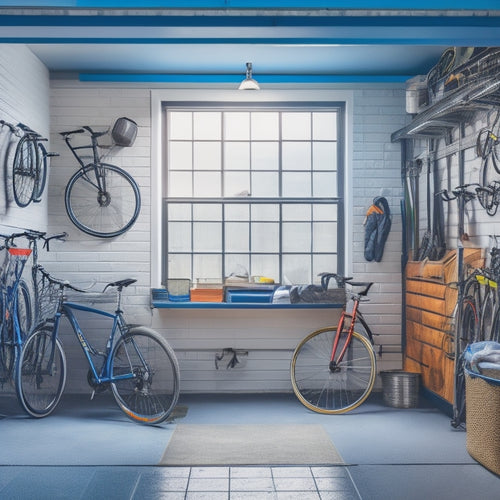
What's the Best Way to Store Your Bikes?
You'll need a strategic plan to store your bikes efficiently, considering factors like garage space, bike type, and d...
-
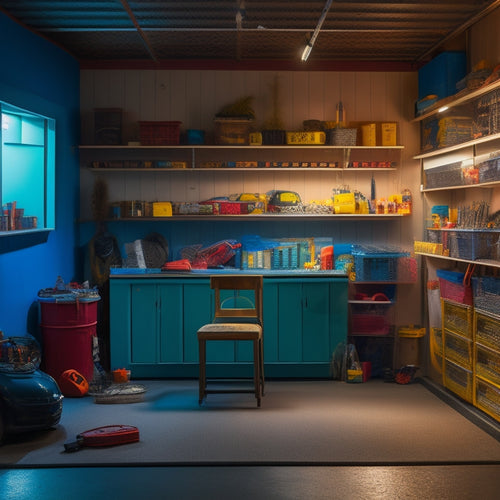
Shelving Solutions for Small Garage Spaces
You can optimize your small garage space by implementing strategic shelving solutions that maximize vertical storage,...
