
What's the Secret to a Clutter-Free Small Garage?
To achieve a clutter-free small garage, start by evaluating your space, noting dimensions, obstructions, and areas needing attention. Purge everything unnecessary, broken, or outdated, and categorize items into keep, donate/sell, and discard piles. Optimize your layout by creating zones for specific activities or storage, utilizing vertical storage options like shelves and hooks, and choosing multifunctional products. Install shelving and cabinets, and hang items from the ceiling to maximize space. Finally, establish habits and routines to maintain your newly organized garage. Now that you've got a solid foundation, you're ready to reveal the full potential of your garage.
Key Takeaways
• Measure and assess your garage space to identify areas needing attention and optimize layout for efficiency and functionality.
• Purge and declutter unnecessary items, adopting a minimalist lifestyle, and categorize items into zones for easy retrieval.
• Utilize vertical storage options like shelves, hooks, and pegboards to maximize space, keeping floors and workspaces clear.
• Designate activity zones and install shelving and cabinets to provide ample storage, keeping infrequently used items out of the way.
• Establish habits and routines for maintenance, tidying up daily, and scheduling regular purges to maintain a clutter-free garage.
Assessing Your Garage Space
Before you can create a clutter-free small garage, take stock of your space by measuring its dimensions, noting any obstructions or fixed features, and identifying areas that need the most attention. This pivotal step in space assessment will help you understand the layout and functionality of your garage. Take note of the location of windows, doors, and any plumbing or electrical fixtures that may impact your organization plans.
As you assess your space, consider the efficiency and functionality you want to achieve in your garage. Think about how you'll use the space and what you need to store. Identify zones for different activities, such as a workstation, storage area, or parking space. Make a mental note of any areas that are prone to clutter or disorganization.
Purge and Declutter Effectively
With your garage's dimensions and functional requirements firmly in mind, it's time to tackle the clutter that's been holding you back, and the first step is to purge everything that's no longer needed, broken, or outdated.
Adopt a decluttering mindset and be ruthless – if you haven't used it in the past year, it's likely you won't miss it. Separate items into three piles: keep, donate/sell, and discard. Be honest with yourself about each item's purpose and functionality.
As you purge, consider adopting a minimalist lifestyle, where every item has a designated place and serves a purpose. This will help you maintain your newly organized space.
Organization hacks, such as categorizing and grouping similar items, will also make it easier to find what you need when you need it. Finally, think about storage solutions that will keep your garage organized and clutter-free. This might include shelving units, bins, or hooks.
Optimize Your Garage Layout
Now that you've purged and decluttered your garage, it's time to optimize the layout to maximize its potential.
You'll want to create zones for specific activities or storage, and make the most of often-wasted corner spaces.
Zone Your Space Wisely
You'll achieve a clutter-free small garage by dividing it into distinct zones, each serving a specific purpose, and strategically placing items to maximize efficiency and accessibility. This space organization technique allows you to prioritize your needs and allocate space accordingly.
For instance, designate a zone for parking, another for storage, and a third for a workspace. Within each zone, implement storage solutions that cater to the specific items you need to store.
When designing your garage layout, consider the frequency of use and the size of the items. Place frequently used items in easy-to-reach locations, while less-used items can be stored in harder-to-reach areas.
Decluttering tips include removing unnecessary items, grouping similar items together, and labeling storage containers. By creating zones and assigning specific functions to each area, you'll maintain a sense of order and make the most of your limited space.
With a well-planned garage layout, you'll be able to find what you need quickly, and your garage will remain clutter-free and functional.
Maximize Corner Storage
By strategically incorporating corner storage solutions, such as carousel units or slotted shelves, into your garage layout, you can effectively utilize these often-wasted spaces and keep your garage organized and clutter-free.
Corner shelving is a great way to maximize storage capacity without taking up valuable floor space. Look for adjustable shelves that can be customized to fit your specific storage needs.
When selecting storage solutions, consider the types of items you need to store. For example, if you have a lot of long-handled tools, such as rakes or shovels, a slotted shelf or a pegboard with hooks may be the best option.
On the other hand, if you need to store smaller items like nuts and bolts, a carousel unit with small compartments may be more suitable.
Utilize Vertical Storage Options
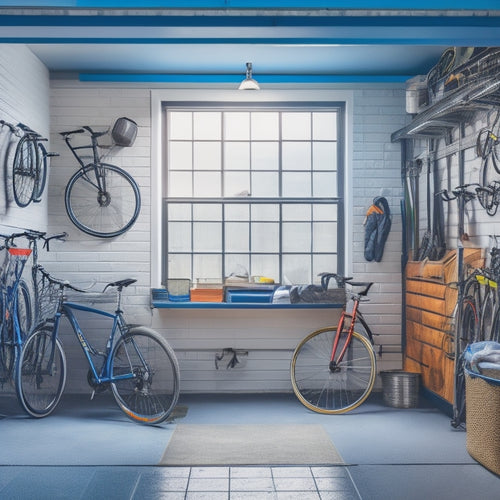
Maximize your garage's ceiling height by installing shelves, hooks, or a pegboard that can hold bins, baskets, and other storage containers, keeping your floor and workspaces clear. This is an essential step in mastering clutter control and optimizing your garage's vertical space.
By utilizing vertical storage options, you'll be able to store more items without sacrificing precious floor space. This organizing tip is especially significant in small garages where every inch counts.
When selecting storage solutions, consider the items you need to store and choose containers that fit your specific needs. For example, if you have a lot of long-handled tools, install a pegboard with hooks to keep them organized and within reach. If you have smaller items like nuts and bolts, use bins or baskets with labels to keep them tidy and easy to find.
Choose Multifunctional Products
Opt for storage solutions that serve multiple purposes, such as a cabinet with built-in workstations or a shelving unit with integrated bins, to streamline your garage's layout and make the most of its limited space. By choosing multifunctional products, you'll reduce clutter and create a more efficient workspace.
For instance, a wall-mounted foldable workbench can provide a dedicated area for projects while taking up minimal space when not in use. Similarly, a storage ottoman with a removable top can store items like tools or seasonal decorations while also serving as a seat.
Incorporate space saving solutions like stackable bins and baskets to maximize storage capacity. These organizational hacks will help you keep items off the floor, making it easier to navigate your garage.
Additionally, consider a pegboard with hooks and bins to hang frequently used items, keeping them within easy reach. By investing in multifunctional products, you'll create a clutter-free small garage that's both functional and efficient.
Label and Sign Everything
To maintain a clutter-free small garage, you'll need to create a system that's easy to follow and understand.
That's where labeling and signing everything comes in - it's crucial to identify storage zones, allocate a home for each item, and use clear labeling to guarantee you can find what you need quickly.
Identify Storage Zones
As you stand in your small garage, how do you decide where to store each item to maintain a clutter-free space and make the most of your limited square footage? Identifying storage zones is essential to achieving this goal. By categorizing your items into zones, you can create a functional and organized space.
Here's a breakdown of potential storage zones in your small garage:
| Zone | Items | Storage Solutions |
|---|---|---|
| Tool Zone | Hand tools, power tools, and accessories | Pegboard, tool chest, and hooks |
| Sports Zone | Bicycles, sports equipment, and accessories | Bike rack, shelving units, and bins |
| Seasonal Zone | Holiday decorations, out-of-season clothing, and accessories | Clear storage bins, shelving units, and overhead storage |
Assign a Home
With your storage zones defined, you're ready to take the next step by assigning a home to each item within those zones, making it convenient to find what you need when you need it. This process is similar to room organization, where you designate a specific place for each item in your kitchen storage, bedroom layout, or living room decor.
In your garage, it's crucial to do the same, so everything has a designated spot. This will prevent clutter from building up again in the future. Start by grouping similar items together, such as tools, sports equipment, or seasonal decorations. Then, assign a specific location within the zone for each group.
For example, you might dedicate a specific shelf or bin to your tools or a specific hook for your bike. By doing so, you'll create a sense of order and structure, making it easy to maintain your newly organized garage. Remember, the key is to be intentional about where you place each item, so it becomes second nature to put things back in their assigned home.
Clear Labeling
You'll maintain your garage's organization by labeling and signing everything, ensuring that you and others can quickly identify what's stored in each zone and where items belong. This is an essential step in keeping your garage clutter-free, as it eliminates the 'where did I put that?' dilemma and saves you time in the long run.
Use clear, descriptive labels on storage bins, shelves, and hooks, and consider adding signs to designate specific areas, such as a 'Tool Zone' or 'Seasonal Storage.' This will also help you establish effective storage habits, making it easier to put things back in their assigned home.
As an added bonus, labeling and signing will encourage others to respect your organizational system and follow your lead. By implementing this simple yet powerful organizational tip, you'll be able to enjoy a clutter-free garage that's both functional and stress-free.
Designate Zones for Activities
Divide your small garage into distinct zones, each dedicated to a specific activity, to maximize functionality and maintain a clutter-free space. This approach allows you to allocate specific areas for tasks, reducing clutter and increasing productivity.
For instance, designate a zone for DIY projects, another for bike storage, and a third for gardening tools. By doing so, you'll create activity areas that are tailored to your needs, making it easier to find what you need when you need it.
Effective space utilization is key to a clutter-free garage. Consider the frequency of use and the size of each activity area when allocating space. Store less frequently used items in less accessible areas, and reserve prime real estate for daily essentials.
Implement organization tips like categorizing similar items together and using storage solutions like bins, hooks, and baskets to keep items off the floor. By creating zones for specific activities, you'll be able to maintain a clutter-free garage that's both functional and efficient.
Install Shelving and Cabinets
Three tiers of shelving, strategically positioned along the garage's perimeter, will provide ample storage for infrequently used items, keeping them out of the way while maintaining easy access. You'll be able to store seasonal decorations, out-of-season clothing, and other items that you don't need frequent access to.
Consider investing in custom shelving that's specifically designed for your garage's unique dimensions and storage needs. This will guarantee that you're maximizing your space and keeping your most valuable items within reach.
In addition to shelving, DIY cabinets can be a great way to add additional storage to your garage. You can build or install cabinets that fit snugly against the wall, providing a secure and organized space for tools, equipment, and other garage essentials. Look for cabinets with adjustable shelves and dividers to customize your storage space even further.
Hang Items From the Ceiling
By hanging items from the ceiling, you can free up valuable floor and wall space, creating a more streamlined and organized garage that's perfect for working on projects or parking your vehicle.
This ceiling storage solution is especially useful for infrequently used items like seasonal decorations, luggage, or camping gear. Look for creative solutions like overhead bins, hooks, or pulley systems to maximize your garage's vertical space.
Consider installing a slatwall or pegboard on the ceiling to hang items like bikes, tools, or accessories. Overhead organization is key to a clutter-free garage, and with the right space saving ideas, you can make the most of your ceiling's storage potential.
For example, hang a storage rack for kayaks or paddleboards, or suspend a cargo carrier for extra storage. By utilizing your garage's ceiling, you'll be amazed at how much more floor space you can free up.
With a little creativity and planning, you can turn your garage into a functional and organized space that's perfect for any project or activity.
Maintain Your New Space
Now that you've organized your small garage, maintaining your new space is crucial to prevent clutter from building up again.
You'll want to establish habits and routines that'll help you keep your garage organized and clutter-free.
Daily Cleaning Routine
Every morning, take a few minutes to tidy up your small garage, putting away tools and supplies in their designated places to maintain a sense of organization and control. This daily cleaning routine is essential in keeping your garage clutter-free. It's all about time management - allocating a small chunk of your morning to maintain your space. By doing so, you'll avoid the buildup of clutter and make the most of your garage's limited space.
Effective organization tips include categorizing your tools and supplies, labeling storage bins, and assigning a home for each item. This way, you'll know exactly where everything is, and you can quickly find what you need. Set a timer for 10-15 minutes and challenge yourself to tidy up as much as possible during that time.
Focus on one area at a time, such as the workbench or storage shelves. By incorporating this daily routine into your schedule, you'll be able to maintain your garage's organization and control, ensuring it remains a clutter-free and functional space.
Set Boundaries Early
To prevent clutter from creeping back into your newly organized garage, establish clear boundaries and rules for what can be stored in the space and what should be disposed of or donated. By setting these boundaries early, you'll avoid the accumulation of unnecessary items and maintain your garage's organization.
Decide what you want to keep, what you can donate or sell, and what needs to be thrown away. Label each area of your garage with its designated purpose, such as 'tool storage' or 'seasonal decorations.' This will help you and others understand what belongs in each space.
Establishing boundaries also means being mindful of what you bring into your garage. Before bringing in new items, ask yourself if they've a designated home and if they're truly necessary. If not, consider alternatives, like storing them elsewhere or finding a different solution.
Schedule Regular Purges
By incorporating regular purges into your maintenance routine, you'll guarantee your newly organized garage stays clutter-free and continues to function as intended. Schedule regular purges to maintain your space and prevent clutter from building up again. Set a specific date and time, such as every three months, to tackle areas that tend to accumulate clutter.
During these purges, use effective purging methods like the 'one-touch rule' where you make a decision about an item as soon as you touch it. Implementing organizing tips like categorizing items into 'keep,' 'donate,' and 'recycle' piles will also help streamline the process. Be ruthless about getting rid of items that no longer serve a purpose or are broken beyond repair.
Frequently Asked Questions
How Do I Deal With Garage Clutter That's Sentimental or Hard to Part With?
When dealing with sentimental garage clutter, you're held back by emotional attachment, making it tough to let go. Employ decluttering techniques like categorizing, and organization strategies like storing items out of sight to help you part with sentimental items more easily.
Can I Still Have a Clutter-Free Garage With Ongoing Projects and Repairs?
You can maintain a clutter-free garage amidst ongoing projects by designating a specific area for work-in-progress, utilizing vertical space with adjustable shelving, and keeping essential organizing tools and materials within easy reach.
Should I Hire a Professional Organizer or Do It Myself?
You're weighing DIY vs hiring a pro to organize your garage. Compare costs: a professional's hourly rate ($50-$100) versus your time and potential DIY mistakes.
How Do I Keep My Garage Organized During Frequent Use or With Multiple Users?
To maintain your garage's organization, you'll need systems that adapt to frequent use and multiple users. Implement rotating storage units and maximize vertical shelving to guarantee easy access and visibility, keeping your space clutter-free and efficient.
Are There Any Eco-Friendly or Sustainable Garage Organization Options Available?
You'll be delighted to discover eco-friendly alternatives to traditional garage organization systems, offering sustainable solutions that not only declutter your space but also reduce your carbon footprint, with eco-friendly storage options made from recycled materials.
Related Posts
-
What's the Best Way to Store Your Bikes?
You'll need a strategic plan to store your bikes efficiently, considering factors like garage space, bike type, and d...
