
Why Cluttered Garages Are a Thing of the Past
You've likely spent hours searching for misplaced tools, wasting time and energy amidst the chaos of a cluttered garage. But, it's time to break free from the cycle of disorganization. Start by allocating time to clear out the garage and sorting items into keep, donate/sell, and discard piles. then, categorize and group similar items, and assign a home for everything. Optimize your vertical storage space, utilize hidden storage compartments, and label everything clearly. Finally, designate a workspace zone and implement a maintenance routine. With these strategies, you'll be well on your way to transforming your garage - and it's just the beginning.
Key Takeaways
• Decluttering and categorization strategies help create a sense of order, maximizing space and functionality in the garage.
• Organizational systems, such as color coding and labeling, streamline storage and reduce frustration when searching for items.
• Implementing hidden storage solutions, like retractable bins and secret compartments, optimize storage capacity from floor to ceiling.
• A well-designed workspace zone with designated tool areas and clear boundaries enhances garage functionality and maintenance.
• Regular cleaning and maintenance routines, assigned to specific family members, ensure the garage remains organized and clutter-free.
Purge the Unwanted Items First
Start by allocating a few hours to tackle the demanding task of clearing out everything from your garage, and then sort items into three piles: keep, donate/sell, and discard. This initial step is vital in adopting a minimalist approach to your garage organization.
As you start the decluttering process, be prepared to face your emotional attachment to certain items. Recognizing that emotional attachment can lead to hoarding tendencies is crucial, making it challenging to part with items that no longer serve a purpose.
To overcome this, focus on the functionality and usefulness of each item. Question if you've used it in the past year or if it's still in good condition. Be honest with yourself, and keep in mind that the objective is to create a clutter-free space that enhances efficiency and productivity.
While sorting through your items, remember that the 'keep' pile should only contain necessary items that add value to your daily life. By being firm in your decision-making, you'll be able to create a more organized and practical garage that aligns with your minimalist goals.
Categorize and Group Similar Items
Once you've purged your garage of unwanted items, categorize and group similar items together, such as tools, sporting equipment, and seasonal decorations, to create a sense of order and make the most of your available space. This sorting strategy is a key decluttering technique that sets the stage for a well-organized garage.
Here are some effective grouping methods to bear in mind:
-
Tools and Equipment: Group hand tools, power tools, and machinery together to create a workstation that's easy to navigate.
-
Seasonal Decorations: Store holiday decorations, summer gear, and winter equipment in labeled bins to keep them out of the way until needed.
-
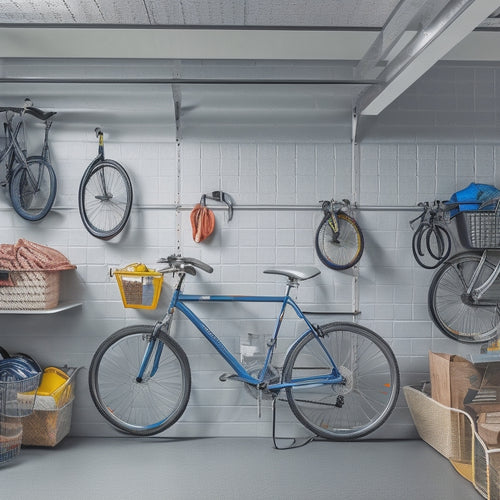
Sports and Outdoor Gear: Organize bicycles, skateboards, and other outdoor equipment in a designated area to keep them visible and accessible.
- Storage and Supplies: Designate a section for storage bins, cleaning supplies, and other miscellaneous items to keep them organized and within reach.
Assign a Home for Everything
By categorizing and grouping similar items, you've created a solid foundation for your garage organization project; now, assign a home for each item to guarantee everything has a designated place, making it easy to find what you need when you need it. This step is vital in maintaining your newly organized garage and preventing clutter from building up again.
Start by designating specific areas or zones for each category of items. For instance, you can create a 'sports equipment zone' or a 'tool zone'. Within each zone, use color coding and labels to specify where each item belongs. This will help you and others quickly identify where items should be stored.
As you assign a home for each item, remember to declutter and streamline your storage. Get rid of any unnecessary items, and consider using bins, baskets, or shelves to keep items off the floor and out of the way. By doing so, you'll create a garage that's not only organized but also functional and efficient.
With everything in its designated place, you'll save time and reduce frustration when searching for what you need.
Optimize Vertical Storage Space
You can greatly increase your garage's storage capacity by utilizing the often-wasted vertical space, which typically stretches from the garage floor to the ceiling. This often-untapped resource can be optimized with a few simple installations.
Here are some ways to maximize your garage's vertical storage:
-
Ceiling hooks: Hang bicycles, kayaks, or other bulky items from the ceiling to free up floor space.
-
Wall racks: Install shelving or racks on walls to store boxes, bins, or tools.
-
Hanging shelves: Suspend shelves from the ceiling to store items like luggage, camping gear, or seasonal decorations.
- Pegboards: Create a customizable storage system with pegboards and hooks to hang items like bikes, tools, or accessories.
Utilize Hidden Storage Compartments
Take advantage of hidden nooks and crannies in your garage by incorporating cleverly designed storage compartments that keep clutter out of sight. You can create secret compartments in unexpected places, such as behind a false wall or inside a hollowed-out cabinet.
Innovative solutions like retractable storage bins and sliding drawers can be installed in tight spaces, maximizing your garage's storage potential.
To make the most of your garage's hidden storage, consider the items you need to store and the spaces available. For example, install a hidden storage compartment above your garage door to store infrequently used items like seasonal decorations or out-of-season clothing.
You can also use wall-mounted shelves with hidden compartments to store valuable items like tools or equipment.
Invest in Adjustable Shelving
Opt for adjustable shelving units that can be tailored to fit your garage's unique dimensions and storage needs, allowing you to maximize vertical space and accommodate items of varying sizes.
By investing in adjustable shelving, you'll be able to:
-
Customize your storage: Adjust shelves to fit items of different heights and widths, ensuring a snug and secure fit.
-
Maximize vertical space: Make the most of your garage's ceiling height by installing shelves that can be adjusted to reach high storage areas.
-
Create a budget-friendly solution: Adjustable shelving is a cost-effective storage solution that can be adapted to your changing needs.
- Embrace DIY organization: With adjustable shelving, you can easily reconfigure your storage layout as your needs change, making it a DIY-friendly option.
With adjustable shelving, you'll be able to create a custom organization system that meets your specific storage needs. Plus, it's a budget-friendly solution that allows you to make the most of your garage's vertical space.
Label and Sign Everything Clearly
Now that you've optimized your garage's storage capacity with adjustable shelving, it's time to take your organization to the next level by labeling and signing everything clearly.
You'll start by organizing your storage bins so you can find what you need at a glance, then identify parking spaces to keep your garage floor clear, and finally, designate tool zones to streamline your workflow.
Organize Storage Bins
You'll be amazed at how easily you can locate what you need by labeling and signing each storage bin clearly, making it a breeze to find that one specific tool or seasonal decoration amidst the clutter.
To take your garage organization to the next level, follow these simple steps:
-
Color code storage bins by category, such as tools, sports equipment, or seasonal decorations. This visual system will help you quickly identify where items are stored.
-
Assign a specific bin to each category and utilize pegboard organization to hang frequently used items like bikes, tools, or accessories.
-
Use clear and concise labels on each bin, including the contents and the date it was stored.
- Store bins in a logical order, such as grouping similar items together or placing frequently used items in easy-to-reach locations.
Identify Parking Spaces
Labeling and signing each parking spot in your garage guarantees that everyone in the household knows precisely where to park, eliminating confusion and potential damage to surrounding items or vehicles. This essential step in garage organization secures a smooth parking experience, saving you time and reducing stress.
Take the time to measure your garage's parking layout and optimize the space to fit your vehicles comfortably. Consider the size of your vehicles, leaving sufficient space between them for easy access. You can then label each parking spot accordingly, using clear signs that indicate which vehicle belongs in each location. This will prevent mix-ups and make sure that everyone parks in their designated area.
To further optimize your garage's space, consider investing in storage solutions like overhead storage racks or wall-mounted shelves to keep items off the floor, creating a more spacious and organized environment. By implementing these strategies, you'll be able to maximize your garage's space, making it easier to park and maneuver your vehicles.
Designate Tool Zones
By designating specific zones for tools and equipment, you can maintain a clutter-free garage and guarantee that everything has its own assigned home, making it easier to find what you need when you need it. This tool organization strategy boosts efficiency and saves time, allowing you to focus on your projects rather than searching for misplaced items.
To create an effective tool zone, follow these steps:
-
Categorize and group similar tools together, such as hand tools, power tools, and automotive tools.
-
Assign a specific area for each category, ensuring that the area is easily accessible and convenient for your workflow.
-
Use labels and signs to identify each zone, making it easy to locate specific tools and equipment at a glance.
- Install storage solutions, such as hooks, bins, and cabinets, to keep tools organized and off the floor, maximizing your garage's functionality.
Designate a Workspace Zone
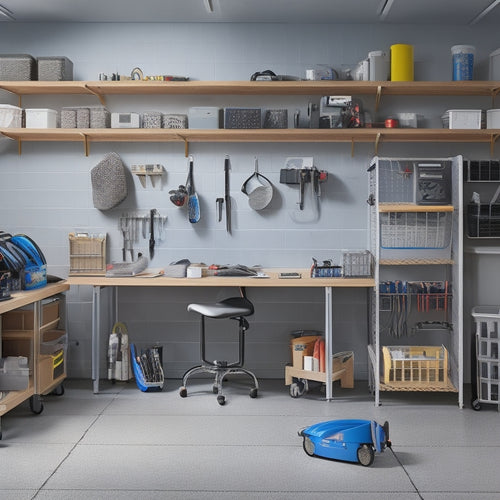
To maximize productivity and efficiency, assign a specific area of your garage for a dedicated workspace zone, where you can focus on projects and repairs without distractions or clutter. This zone should have clear workspace boundaries, separating it from the rest of the garage. Establish a specific area for your workbench, and consider investing in a portable workbench or a wall-mounted foldable table to save space.
Implement organization methods such as pegboards, bins, and baskets to keep your tools and materials within easy reach. Label each storage container to make sure you can quickly find what you need. Consider a slatwall or a modular storage system to customize your storage space.
In your workspace zone, prioritize tasks that require attention, and allocate sufficient space for your projects. Ensure good lighting, and consider investing in a task light or under-cabinet lighting to illuminate your work area.
With a dedicated workspace zone, you'll be more productive, efficient, and focused, making the most of your garage space.
Implement a Maintenance Routine
Now that you've designated a workspace zone, it's time to implement a maintenance routine to keep your garage organized.
You'll need to schedule regular cleaning sessions, assign tasks and zones to specific family members, and set reminders and alerts to guarantee everyone stays on track.
Schedule Regular Cleaning
You set aside a specific time each week to maintain your garage's organization, making sure clutter doesn't creep back in. This regular cleaning schedule is pivotal to keeping your garage organized and clutter-free.
To make the most of your cleaning time, create a checklist of tasks to tackle each week. Here are some essential items to include:
-
Dust and vacuum: Remove cobwebs and dust from shelves and floors to prevent dirt buildup.
-
Wipe down surfaces: Clean any surfaces that have come into contact with dirty tools or equipment.
-
Organize storage solutions: Guarantee all storage bins and shelves are tidy and easily accessible.
- Quick pick-up: Take a few minutes to put away any items that are out of place.
Assign Tasks and Zones
By breaking down your garage's maintenance into manageable tasks and zones, you'll maintain a sense of control and make sure that every area receives regular attention. This approach allows you to delegate tasks effectively, ensuring that every zone is cleaned and organized regularly.
Start by dividing your garage into distinct zones, such as a tool area, storage section, and workspace. Then, assign specific tasks to each zone, like tidying up the tool area or restocking storage bins.
To optimize your space, implement organization tips like labeling storage containers, installing shelving units, and using wall-mounted hooks. This will help keep clutter at bay and make the most of your garage's square footage. By doing so, you'll be able to locate items quickly and efficiently, saving you time and frustration.
With a clear zone layout and task delegation in place, you'll be well on your way to a clutter-free garage that runs like a well-oiled machine.
Set Reminders and Alerts
Every week, schedule a 30-minute maintenance session to tackle tasks in each zone, ensuring your garage remains organized and clutter-free. This dedicated time will help you stay on top of clutter and maintain your hard-earned organization.
To make the most of this session, set reminders and alerts to keep yourself accountable and focused.
Here are some digital organization tips to boost your productivity:
-
Set recurring reminders on your calendar to schedule maintenance sessions.
-
Create a task list with specific tasks for each zone to tackle during the session.
-
Use a timer to keep yourself on track and avoid procrastination.
- Take before and after photos to track your progress and stay motivated.
Consider a Garage Storage System
A well-designed garage storage system can transform your cluttered garage into a functional and organized space that maximizes storage capacity and reduces stress. You're taking the first step towards a garage makeover by considering a storage system that suits your needs.
With various storage solutions available, you can customize your garage to fit your lifestyle. Start by evaluating your storage needs. What do you need to store? How often will you access these items? This will help you determine the type of storage solutions you require.
Look for a system that offers flexibility, durability, and ease of use. Consider installing shelving units, cabinets, or slatwall panels to create a functional and organized space.
Frequently Asked Questions
Can I DIY My Garage Organization or Do I Need a Professional?
You're the master builder of your garage's fate, deciding between DIY organization's flexibility and professional help's precision. Weigh your budget-friendly solutions against custom options, and choose the path that constructs your dream garage.
How Do I Store Seasonal Decorations Without Taking up Too Much Space?
You'll find creative solutions for storing seasonal decorations by using compact storage bins and baskets that maximize vertical space, allowing you to efficiently organize your items while minimizing space usage.
Are Garage Organization Systems Compatible With Different Garage Sizes?
You'll find that garage organization systems adapt to your space, offering modular solutions and space-saving ideas, such as custom shelving and overhead storage, to efficiently utilize your garage's unique dimensions.
Can I Use Reclaimed Wood for DIY Garage Storage Projects?
You can totally use reclaimed wood for DIY garage storage projects! Get creative with upcycling old pallets or wooden crates to build unique garage shelves, adding a touch of rustic charm to your organized space.
How Often Should I Reorganize My Garage to Maintain Its Clutter-Free State?
'You should reorganize your garage every 3-6 months to maintain its clutter-free state. Assess your garage shelving and layout, decluttering as needed, to guarantee everything has a designated spot, and adjust the frequency based on your usage and needs.'
Related Posts
-
7 Best Garage Storage Solutions for Busy Families
You're tired of a cluttered garage, and it's time to reclaim your space. As a busy family, you need storage solutions...
-

Why Home Gyms in Garages Need Smart Storage
You've invested in a home gym in your garage, but without smart storage, your workouts are easily derailed by clutter...
-
What Garage Organization Works for Limited Mobility?
You can create a garage organization system that works for you, even with limited mobility, by incorporating adaptabl...
