
Why Cluttered Garages Persist & How to Fix Yours
You're not alone in struggling with a cluttered garage, a common issue impacting millions of homeowners. The root cause lies in the lack of organization strategies, turning your garage into a catch-all for items without a designated place. To fix yours, start by evaluating your storage needs, utilizing vertical space with lofts and shelves, and optimizing wall storage with hanging systems and hooks. Next, consider innovative shelf designs and create activity zones to maintain organization. By implementing labeling systems and adapting to seasonal changes, you'll be well on your way to a clutter-free garage - and there's more to explore to secure its long-term success.
Key Takeaways
• Cluttered garages persist due to a lack of organization strategies, making it a catch-all for items without a designated place.
• Assessing garage storage needs involves evaluating types of items, frequency of use, and available space to create effective zones and solutions.
• Maximizing storage space can be achieved by utilizing storage lofts, shelves, and overhead racks, and considering sturdy, adjustable shelves and ceiling height.
• Implementing labeling systems and adapting to seasonal changes with weatherproof storage can help maintain a clutter-free garage.
• Regular maintenance, including scheduled cleanups and reviewing organization every 3-6 months, is crucial for long-term success in keeping a garage clutter-free.
Cluttered Garage Epidemic Explained
You're not alone in struggling with a cluttered garage, as millions of homeowners across the country are fighting the same battle. Keeping clutter at bay in this area can be challenging, especially since it's often out of sight, out of mind. However, the consequences of a cluttered garage can be significant, from reduced storage capacity to safety hazards.
Several explanations contribute to the prevalence of cluttered garages. One major factor is the lack of organization strategies in place. Without a clear system for storing and categorizing items, it's simple for clutter to build up. Additionally, the garage often serves as a catch-all for items that don't have a designated place in the home.
To combat clutter, establishing effective organization strategies is crucial. This might involve installing shelving or cabinets, designating specific zones for different items, and implementing regular cleaning schedules.
Identifying Garage Storage Needs
Before designing an organizational system, evaluating your garage's unique storage needs is essential. This involves considering the types of items you need to store, the frequency of use, and the available space.
You'll want to think about the items you use regularly, such as bikes, lawn equipment, or tools, and those that can be stored out of the way, like seasonal decorations or infrequently used sporting goods.
To get started, ask yourself:
-
What're the must-haves in your garage, and how can you accommodate them?
-
What items can be stored off the floor to free up space, and would custom shelving or hidden storage solutions work for these items?
-
Are there any specific zones you'd like to create in your garage, such as a workspace or an area for sports equipment?
Maximizing Vertical Space
As you're organizing your garage, don't forget to look up - literally! You're probably not using your garage's vertical space efficiently, and that's where storage lofts and shelves come in.
Storage Lofts and Shelves
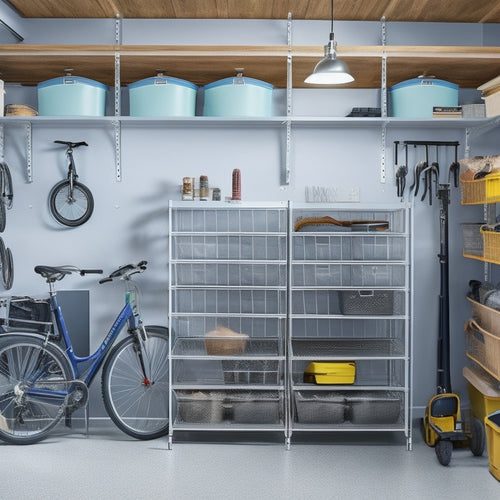
Maximizing your garage's vertical space with storage lofts and shelves is a crucial step in reclaiming your cluttered area, as it allows you to stash infrequently used items out of the way while keeping them accessible. By utilizing loft organization, you can free up floor space and reduce clutter.
Here are some benefits of incorporating storage lofts and shelves into your garage:
-
Increased storage capacity: Make the most of your garage's vertical space by installing shelves and lofts that can hold boxes, bins, and other items.
-
Easy access: Install shelves and lofts at a comfortable height to guarantee you can easily retrieve items when needed.
-
Improved organization: Label and categorize your stored items to maintain a sense of organization and make it simpler to find what you need.
When it comes to shelving solutions, consider the types of items you need to store and choose shelves that are sturdy and adjustable. Look for shelving units with built-in bins and baskets to keep smaller items organized.
Utilize Ceiling Height
Take advantage of your garage's ceiling height by installing overhead storage racks, which can hold infrequently used items like seasonal decorations, out-of-season clothing, or luggage, keeping them out of the way while freeing up valuable floor space. This is an effective way to maximize your garage's vertical space and create a more organized and clutter-free environment.
| Ceiling Storage Options | Benefits |
|---|---|
| Overhead bins and baskets | Store items like out-of-season clothing, seasonal decorations, or luggage |
| Ceiling-mounted shelves | Perfect for storing infrequently used items like camping gear or luggage |
| Hanging storage racks | Ideal for storing bikes, kayaks, or other outdoor equipment |
| Pulley systems | Easily access stored items without using ladders |
| Ceiling hooks | Hang items like bikes, tools, or accessories, keeping them organized and out of the way |
Utilizing Wall Storage Options
Now that you've maximized your garage's vertical space, it's time to focus on utilizing wall storage options.
You'll want to optimize your hanging systems to make the most of this space, ensuring that everything has a designated spot and is easily accessible.
Maximizing Vertical Space
Your garage's walls are a treasure trove of untapped storage potential, waiting to be leveraged with the right tools and systems. By maximizing your vertical space, you can reclaim your garage floor and create a more organized, functional area. Here are three ways to get started:
-
Install vertical shelving: This will provide ample storage for bins, boxes, and other containers. Look for shelving units specifically designed for garage use, which can withstand heavy loads and harsh environments.
-
Utilize wall-mounted hooks: Hang bicycles, tools, and accessories from the walls, keeping them off the floor and out of the way. This is especially useful for items that are used frequently, like gardening tools or sports equipment.
-
Invest in organizing tools: Invest in a pegboard and hang organizing tools like bins, baskets, and hooks to create a customized storage system. This will help keep your garage organized and make the most of your wall space.
Optimizing Hanging Systems
You can greatly expand your garage's storage capacity by optimizing hanging systems, which are designed to hold a wide range of items, from heavy tools to lightweight accessories. By utilizing wall storage options, you can efficiently organize tools, minimize clutter, and free up valuable floor space.
Here are some ideas to get you started:
| Hanging System | ** Ideal Items to Store** |
|---|---|
| Hooks | Bikes, tools, accessories |
| Bins and Containers | Small parts, nuts and bolts, screws |
| Shelves | Toolboxes, storage bins, infrequently used items |
When selecting a hanging system, take into account the weight capacity, durability, and adjustability of the system. You may also want to contemplate installing a pegboard, which provides a versatile and customizable storage solution. By optimizing your hanging systems, you can create a more organized, clutter-free garage that makes it easy to find what you need when you need it.
Innovative Shelf Designs
Maximize your garage's storage capacity with custom shelving units that incorporate slanted surfaces, shallow bins, and hanging rods to keep items organized and easily accessible. These innovative designs allow you to make the most of your garage's vertical space, ensuring that every item has a designated place.
To take your shelving to the next level, consider the following features:
-
Customized hooks: Install hooks specifically designed for your most frequently used items, such as bikes, tools, or accessories.
-
Adjustable racks: Invest in shelving units with adjustable racks that can be tailored to fit items of varying sizes.
-
Tiered storage: Incorporate tiered shelving units that allow you to store items of different heights, making the most of your garage's vertical space.
Floor Space Optimization
By strategically positioning storage containers and workstations, you can reclaim your garage's floor space and create a more efficient work area. A well-planned garage layout is key to maximizing floor space optimization.
Start by identifying the areas where you need the most storage and work surface. Consider the items you use most frequently and place them in easy-to-access locations. Install shelving units or cabinets near the walls to keep items off the floor and out of the way.
Next, think about the type of storage solutions you need. Do you have a lot of small items like nuts and bolts? Install a pegboard with bins and hooks to keep them organized. Are you a DIY enthusiast with lots of power tools? Invest in a workbench with built-in storage for your tools.
By thoughtfully arranging your storage containers and workstations, you'll be able to move around your garage with ease and find what you need quickly. This won't only save you time but also reduce stress and frustration.
With a well-optimized floor space, you'll be able to tackle projects with confidence and enthusiasm.
Creating Zones for Activities
Now that you've optimized your floor space, it's time to create zones for different activities.
You'll need to designate specific work areas for tasks like DIY projects or bike maintenance, and assign storage spaces for related tools and equipment.
Designate Work Areas
Create separate zones within your garage for different activities, such as a workspace for projects, a storage area for seasonal items, and a spot for parking your car. This will help you maintain an organized and clutter-free space. By designating specific areas for different tasks, you'll be able to focus on the task at hand without distractions.
To create an efficient workspace, consider the following:
-
Set up an ergonomic workspace: Guarantee your workbench is at a comfortable height, and your tools are within easy reach to avoid straining your back and neck.
-
Optimize your layout: Position your workspace near a source of natural light, and organize your tools and materials in a logical and accessible manner.
-
Leave space to move around: Make sure you have enough room to move around your workspace comfortably, without feeling cramped or restricted.
Assign Storage Spaces
Assign Storage Spaces
You'll need to designate specific storage spaces for each zone, ensuring that items used for a particular activity are stored in close proximity to their corresponding work area. This will help you stay organized and focused while working on projects. For instance, if you have a woodworking zone, allocate storage for your tools, lumber, and other materials nearby.
When assigning storage spaces, consider the frequency of use and the size of the items. Store frequently used items in easy-to-reach locations, while less frequently used items can be stored in higher or harder-to-reach areas.
Make the most of your garage's vertical space by using wall-mounted storage solutions, such as shelves, hooks, or bins.
Effective organization tips include labeling each storage space so you can quickly identify what's inside. This will save you time and reduce frustration when searching for specific items.
Implementing Labeling Systems
You'll find that labeling systems are crucial to maintaining a clutter-free garage, as they allow you to quickly identify what's stored in each bin or on each shelf. This saves you time and effort when searching for specific items, and it also helps to prevent clutter from accumulating again.
Here are three labeling strategies to help you get started:
-
Use clear and concise labels: Avoid using ambiguous labels like 'Miscellaneous' or 'Stuff'. Instead, use descriptive labels that clearly indicate what's inside the bin or on the shelf.
-
Implement color coding: Use different colored labels or stickers to categorize items by type, season, or frequency of use. This visual system makes it easy to identify what you need at a glance.
-
Label both the bin and the shelf: Double-labeling guarantees that you can see what's inside the bin even when it's stored on a high shelf. This is especially useful for infrequently used items that you may not need to access often.
Adapting to Seasonal Changes
As the seasons change, your garage storage needs to adapt to accommodate different gear, equipment, and activities, ensuring that your newly organized space remains functional and clutter-free. This means incorporating seasonal organization strategies to keep your garage organized and clutter-free throughout the year.
For instance, during winter, you'll need to store summer equipment like bicycles and lawn mowers, while in summer, you'll need to make space for winter gear like skis and snowboards.
To achieve this, decluttering tips come in handy. Take time to sort through your seasonal items, getting rid of anything broken, outdated, or no longer useful. Store items you want to keep in weatherproof storage bins or containers, labeling them clearly so you can easily find what you need. This will also help protect your gear from harsh weather conditions.
Maintenance for Long-Term Success
By establishing a regular maintenance routine, you can ensure your newly organized garage remains clutter-free and functional over time. This is vital for long-term success, as clutter reduction requires ongoing effort to prevent old habits from creeping back in.
To maintain your organized garage, follow these simple steps:
-
Schedule regular cleanups: Set aside 15-30 minutes every week to tidy up your garage, putting away items that are out of place and addressing any clutter hotspots.
-
Monitor your habits: Be mindful of your daily routines and how they impact your garage's organization. Make adjustments as necessary to prevent clutter from building up again.
-
Review and adjust: Every 3-6 months, take a step back to assess your garage's organization and make any necessary adjustments to your systems and habits.
Related Posts
-
What's the Best Garage Storage for Small Businesses?
You need a garage storage system that boosts productivity and organization. Maximize vertical space with ceiling-reac...
